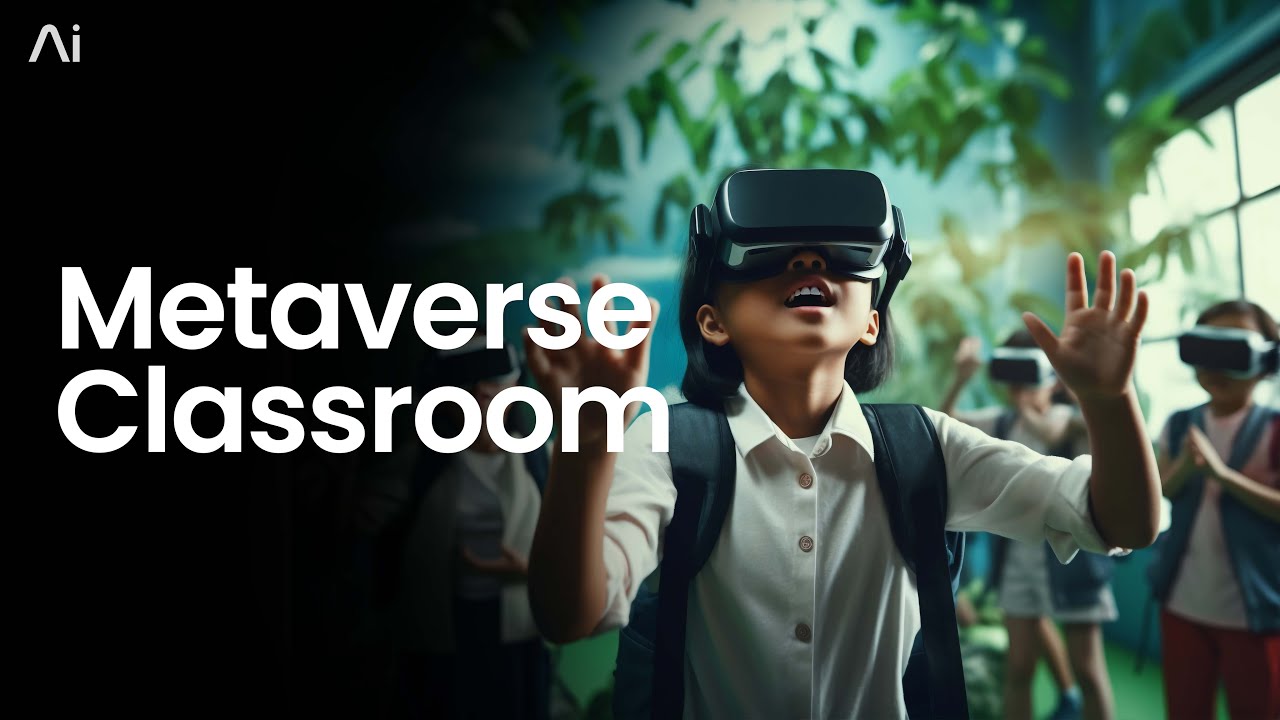
The hallowed halls of learning, once defined by chalk dust and desks, are undergoing a radical transformation. The catalyst is no longer just a new textbook or a software update; it is the metaverse. Far from the realm of science fiction, metaverse classrooms are rapidly becoming a tangible reality, reshaping the educational landscape from K-12 to higher education. What began as a concept in a 1992 novel is now a pedagogical tool, with universities across the globe piloting programs that replace traditional lectures with immersive, three-dimensional experiences . This shift represents more than just a technological upgrade; it signals a fundamental change in how educators approach teaching and how students experience learning.
This comprehensive article delves into the emergence of the metaverse in education. We will explore its practical applications, the technology powering it, the profound benefits for student engagement, and the very real challenges that institutions face as they build these digital campuses. From the digital twin “metaversities” in Europe to intimate VR seminars in the United States, we will examine how this new frontier is not just coming—it is already here.
A. The Dawn of the Digital Campus: Defining the Metaverse Classroom
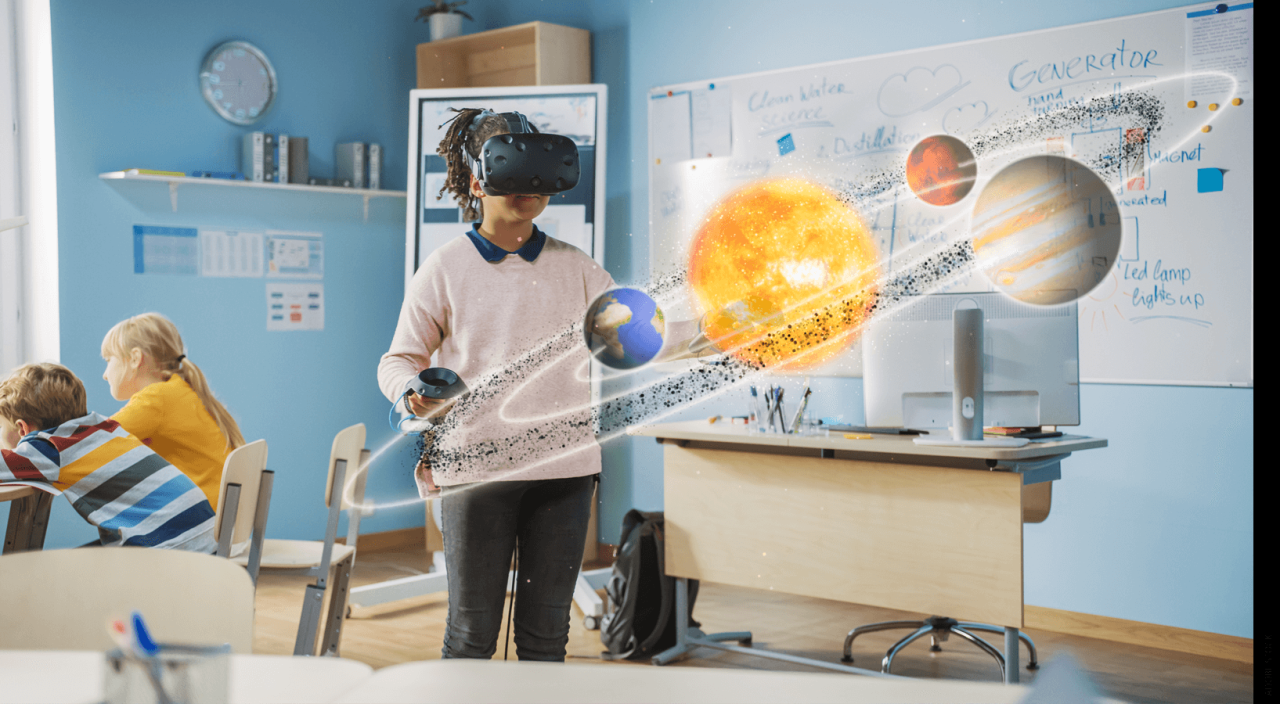
To understand the metaverse classroom, one must first move beyond the popular image of a singular, interconnected virtual world. In an educational context, the metaverse refers to a network of immersive, three-dimensional virtual spaces where users, represented by avatars, can interact with each other and digital objects in real-time . It is the convergence of physical and digital realities, facilitated primarily by virtual reality (VR) and augmented reality (AR) technologies. The goal is to foster a heightened sense of presence the feeling of actually “being there” which is the critical element that distinguishes it from flat, two-dimensional platforms like Zoom or traditional online learning portals .
Leading this charge are initiatives like Meta’s “Meta for Education” program. In a significant move to validate the practical use of VR, Meta partnered with over a dozen universities in the US and UK to test the efficacy of immersive learning . This has led to the creation of “metaversities” digital twin campuses that are exact virtual replicas of real-world institutions. For instance, the University of Leeds in the UK now has a virtual campus where students can attend classes in VR, while Spain’s University of the Basque Country is preparing to launch virtual anatomy and physiotherapy courses . These aren’t static 3D models; they are dynamic, interactive spaces where the rules of physics can be bent, and the boundaries of a traditional classroom cease to exist.
B. Reimagining the Learning Experience: From Passive Listening to Active Exploration
The most significant promise of the metaverse lies in its ability to revolutionize the learner’s journey. Traditional pedagogy often positions the student as a passive recipient of information. In contrast, the metaverse fosters active, experiential, and constructivist learning. Students are no longer just reading about historical events; they can witness them. They are not just memorizing the parts of a cell; they can navigate through it.
1. Learner-Content Interaction: The Power of “Learning by Doing”
The most immediate application of VR in education is the transformation of how students interact with content. Instead of abstract symbols in a textbook, concepts become tangible, manipulable objects. Research into VR applications consistently highlights the power of “hands-on” engagement with virtual content . Imagine an architecture student walking through a building they designed before a single brick is laid, or a marine biology student exploring the Great Barrier Reef to witness the effects of climate change firsthand .
This multisensory engagement caters to diverse learning styles, whether visual, auditory, or kinesthetic. Studies have shown that students trained in VR for tasks like building a drone performed more effectively than those using offline methods, and they often demonstrate greater content memory compared to traditional textbook learning . The University of Miami’s pioneering course, “Religion and Sacred Spaces in the Era of Virtual Reality and Artificial Intelligence,” exemplifies this. Students didn’t just discuss sacred spaces; they created them as a final project a “Zen Oasis” complete with a revolving Buddha statue, contemplative music, and a serene ocean view, allowing the class to experience the meditation ritual together .
2. Learner-Environment Interaction: The Classroom Without Limits
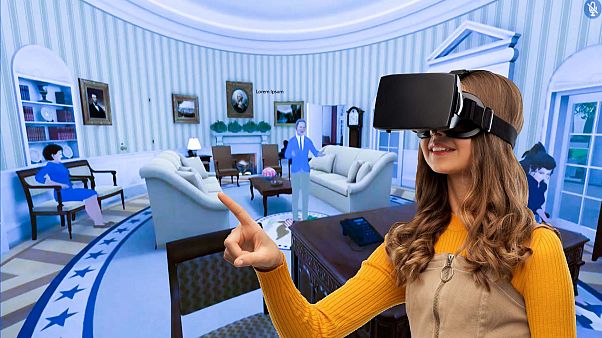
A key differentiator in VR is the interaction with the environment itself. The Meta-MILE (Multi-layered Immersive Learning Environment) framework, a proposed model for future classrooms, emphasizes that the environment is not just a backdrop but an active participant in the learning process . In the metaverse, the classroom can be a Roman amphitheater, a corporate boardroom, or a campfire under a starry sky, with each setting fundamentally altering the tone and flow of the discussion . Students and faculty at the University of Miami noted that conversations in a virtual conference room were often terse, while discussions flowed more freely in outdoor virtual settings, demonstrating the profound psychological impact of the learning environment .
3. Learner-Learner Interaction: Collaboration Without Proximity
Collaboration in the metaverse transcends geographical limitations. Students from different continents can work on projects together as if they were in the same room. This goes beyond video conferencing; it involves shared manipulation of 3D objects, collaborative design, and spontaneous social interaction. For example, language learners in virtual worlds like Second Life or OpenSimulator can achieve contextualized communication competence by interacting with others in a realistic cultural setting, reducing the anxiety often associated with speaking a foreign language . Furthermore, for students with social anxiety, the avatar-based interaction can be less intimidating than face-to-face contact, encouraging them to speak up and participate more actively than they might in a traditional classroom .
4. Learner-Instructor Interaction: Personalized Engagement at Scale
The metaverse can also redefine the relationship between student and teacher. In a physical lecture hall, only the students in the front row feel the direct attention of the professor. In a virtual space, the instructor’s avatar can be proximal and seemingly attentive to everyone simultaneously, positioning all students in the “optimal seat” . This technology also holds immense potential for teacher training. Simulations like TeachLivE allow pre-service teachers to practice classroom management skills with a handful of avatar students, receiving real-time feedback and refining their techniques in a risk-free environment before entering a real classroom .
C. The Technology and Infrastructure Powering the Shift
Building these immersive educational experiences requires a robust technological ecosystem. The “classroom” in the metaverse is not a single piece of software but a convergence of several advanced technologies.
-
Virtual Reality (VR) Headsets: Devices like the Meta Quest series are the primary gateway, providing the immersive audio-visual experience that blocks out the physical world and transports the user .
-
Digital Twin Platforms: Companies like VictoryXR are the architects of the metaversities, building the accurate 3D replicas of university campuses that serve as the foundation for these virtual schools .
-
Artificial Intelligence (AI): AI is the silent engine driving personalization and interaction. It can power realistic non-player characters (NPCs) for simulations, analyze student behavior to suggest personalized learning paths, and enable adaptive assessments within the gamified learning pathways envisioned by frameworks like Meta-MILE . AI will also be crucial for moderating interactions and ensuring student safety.
-
Blockchain and NFTs: While still nascent in mainstream education, blockchain technology offers the potential for secure management of digital credentials and ownership of student-created digital assets .
-
The New Frontier of SEO: Discoverability in 3D: As more educational content moves into the metaverse, a new challenge arises: how do students and educators find the best virtual spaces and resources? This has given rise to the concept of Spatial SEO . Unlike traditional web pages, content in the metaverse includes 3D models, virtual events, and entire scenes. Search engines and internal platform directories will need to crawl and index these spaces based on new signals such as:
-
Metadata for 3D Objects: Titles, descriptions, and tags for virtual items .
-
Spatial Keywords: Queries like “anatomy lab near the main plaza” will require a new level of geospatial indexing within virtual worlds .
-
User Interaction Signals: Metrics like time spent in a location, foot traffic, and interaction quality will become ranking factors, much like dwell time and bounce rate are on the web .
-
Voice and Visual Search: Optimization will need to account for natural language queries and image recognition, as typing becomes secondary to speaking and gesturing in VR .
-
D. The Bright Horizon: Key Benefits of Immersive Learning
The investment in metaverse classrooms is driven by a host of compelling benefits that address many of the shortcomings of modern education.
-
Unparalleled Engagement and Retention: The immersive nature of VR captures student attention in a way that textbooks and lectures often cannot. By making learning an experience, it improves knowledge retention and sparks curiosity. History comes alive when you can walk through ancient Rome; abstract scientific concepts become concrete when you can manipulate them in 3D .
-
Equitable Access and Democratization of Education: The metaverse can tear down socioeconomic and geographic barriers. A student in a remote village can access a lecture at a prestigious university, participate in a lab session with expensive equipment, or take a field trip to the Louvre . For students with physical disabilities, VR can offer access to experiences and environments that might otherwise be inaccessible, creating a more inclusive learning environment .
-
Safe and Scalable Practice Environments: High-stakes training, whether in medicine, engineering, or public speaking, can be practiced in a zero-consequence virtual space. Medical students can perform virtual surgeries, and future teachers can manage a classroom of unruly avatar students, all without any real-world risk . This builds confidence and competence before real-world application.
-
Future-Proofing Careers: By learning in the metaverse, students become fluent in the digital tools and collaboration methods that will define the future workplace. They are preparing for emerging job roles such as metaverse architects, 3D experience designers, and VR curriculum developers, giving them a competitive edge in the job market .
E. Navigating the Metaverse: Challenges and Critical Considerations
Despite its immense potential, the path to mainstream adoption of metaverse classrooms is fraught with challenges that educators, technologists, and policymakers must address.
-
The Digital Divide and Accessibility: The most pressing concern is equity. VR headsets are expensive, and the powerful computers required to run them are not universally available. Rolling out this technology in underfunded schools risks widening the achievement gap between affluent and disadvantaged students . Furthermore, the physical comfort and safety of the headsets, especially for younger users, is an ongoing concern .
-
Health, Safety, and Well-being: Prolonged use of VR headsets can cause eye strain, disorientation, and motion sickness in some users. There are also concerns about the psychological impact of immersive technology on developing minds, including the potential for increased social isolation if it replaces, rather than supplements, real-world interaction . The uncanny feeling of having one’s personal space invaded by other avatars, even in a virtual setting, is a phenomenon noted by students and warrants further study .
-
Data Privacy and Security: As students interact in these digital spaces, they generate vast amounts of data, from biometrics (eye movement, posture) to behavioral patterns. Protecting this sensitive data from breaches and misuse is paramount. The integration of blockchain and the decentralized nature of some metaverse platforms add further layers of complexity to data governance .
-
Pedagogical Integration and Training: Simply placing a headset on a student’s head does not guarantee learning. The technology must be paired with sound pedagogical strategies. Educators need extensive training not just on how to use the hardware, but on how to design effective, curriculum-aligned learning experiences within these new environments. As one observer noted, education is about critical thinking and discussion, which can be challenging to foster in VR if the experience is not thoughtfully designed .
 F. Conclusion: The Future is an Experience to Be Seen
The metaverse classroom is not a distant, futuristic fantasy; it is an evolving reality being built today in universities from Leeds to Miami . It represents a profound shift from learning as the consumption of information to learning as the experience of discovery. While the technology is still maturing headsets are bulky, graphics will improve, and best practices are still being written the foundational benefits are already clear .
The metaverse offers the tantalizing possibility of a truly global, deeply engaging, and highly personalized education for everyone. It promises to be a powerful tool in the educator’s kit, one that can make complex subjects tangible and bring diverse groups of students together in ways previously unimaginable. However, its successful integration into mainstream education hinges on our ability to navigate the significant challenges of equity, safety, and pedagogical integrity. We must ensure that the metaverse becomes a tool to enhance human connection and understanding, not a shiny, expensive distraction that leaves marginalized students behind. The classrooms of the future are indeed here, and they are a world we have to see and build to believe.