
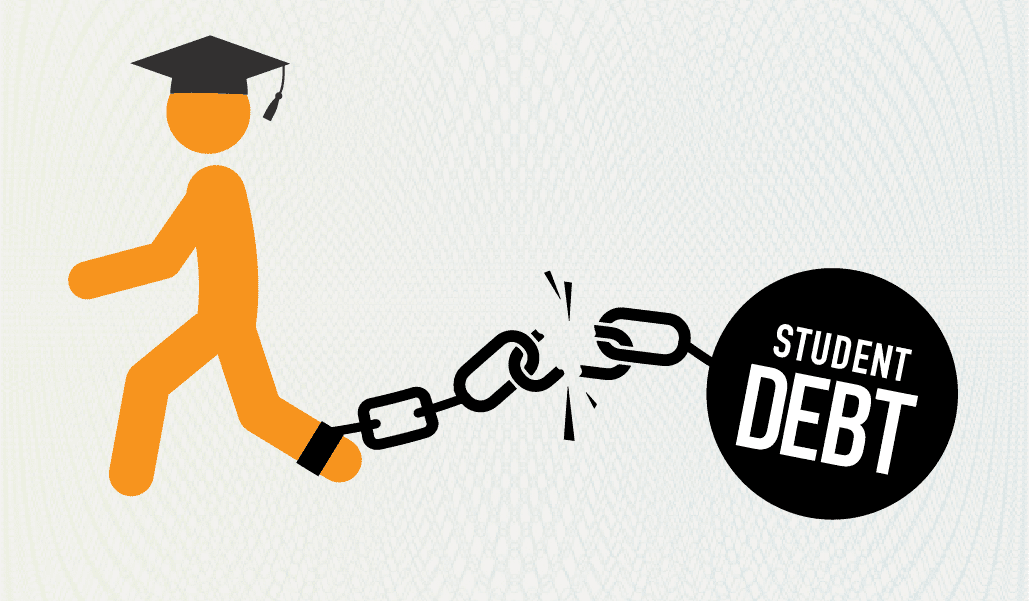
The American dream of higher education as a definitive pathway to prosperity is facing its most significant challenge in generations. What was once a reliable investment in future earnings has, for over 43 million Americans, morphed into a financial anchor. The student debt crisis, characterized by a collective federal balance exceeding $1.6 trillion, is not merely a statistic; it represents a profound drag on the economy and the personal aspirations of millions . As of 2026, this crisis is entering a volatile new phase. Following the turbulent end of pandemic-era protections and the implementation of the One Big Beautiful Bill Act (OBBBA) , borrowers are confronting a drastically altered landscape of repayment, rising monthly obligations, and new limits on borrowing that could reshape access to advanced education for decades .
The narrative of student debt has long been dominated by anecdotes of six-figure balances and unpayable loans. However, the reality is more nuanced—and in many ways, more troubling. While the aggregate debt load is staggering, its distribution and the recent policy responses to it are creating a perfect storm of financial distress for the most vulnerable while potentially closing doors for future generations of professionals . This article delves into the multifaceted dimensions of the worsening crisis, exploring the latest data, the seismic legislative changes taking effect in 2026, and the tangible impact on borrowers’ lives, from homeownership to career choices.
The Current State of the Crisis: A Portfolio Under Pressure
To understand the magnitude of the current crisis, one must look at the state of the federal student loan portfolio just before the enactment of the OBBBA. By 2025, approximately 43 million Americans were responsible for $1.6 trillion in federal student loan debt. The repayment machinery, which ground to a halt during the COVID-19 pandemic, had restarted, but the transition was anything but smooth .
The end of the payment freeze in October 2023, followed by the expiration of the “on-ramp” period in late 2024, brought a harsh reality into focus. By the third quarter of 2025, the system was showing severe strain: 5 million borrowers were in default, and another 7 million were delinquent on their payments. An additional 10 million found themselves in forbearance, often due to legal challenges surrounding newer repayment plans, effectively leaving them in a state of suspended animation regarding their financial futures . This wave of delinquencies has begun to impact credit scores and access to other forms of credit, tightening the financial squeeze on households already struggling with inflation and stagnant wages .
Despite these pressures, the Department of Education has signaled a return to aggressive collection tactics. After a period of relative leniency, the government is restarting practices like ** Treasury offset** (withholding tax refunds) and wage garnishment to collect on defaulted debts. While collections had dipped to around $27 billion annually during the peak forbearance period, they rebounded to $62 billion in 2025, and are expected to rise further as these enforcement mechanisms ramp up .
Debunking the Debt Myth: It”s Not Just About the Balance
Policymakers and the public often operate under the assumption that large debts are the primary problem. However, research consistently shows a paradox: borrowers with the largest balances often have the best repayment outcomes. This is because high balances are typically associated with graduate and professional degrees (such as MDs, JDs, and MBAs) that lead to significantly higher lifetime earnings .
The actual crisis point is found among those with smaller balances. Data indicates that 37% of borrowers owe less than $10,000. Yet, this group accounts for the majority of defaults. The default rate for borrowers with less than $5,000 in debt is more than three times that of borrowers with over $40,000 in debt . The primary driver of this distress is not the size of the debt, but the lack of a degree. Dropouts are much more likely to default (24%) than graduates (9%) , as they shoulder the debt burden without the wage premium that a completed degree provides . This reality makes broad-based loan forgiveness a poorly targeted solution, as it would disproportionately benefit higher-income households with graduate degrees rather than the struggling dropout with a small, yet unpayable, balance .
The OBBBA Revolution: Reshaping Borrowing and Repayment
The most significant changes to the student loan system in decades are being implemented through the One Big Beautiful Bill Act (OBBBA) , signed into law in July 2025. The Act aims to rein in federal costs and institutional accountability but shifts significant risk and cost onto borrowers . The reforms, effective mostly from July 1, 2026, can be broken down into three main areas.
A. New Caps on Graduate and Parent Borrowing
For the past two decades, graduate students and parents (via PLUS loans) faced virtually no borrowing limits, being able to borrow up to the full cost of attendance. This contributed to a ballooning of debt, where graduate students, despite comprising only 17% of enrollment, account for nearly half of all new federal lending . OBBBA introduces strict caps :
-
Graduate Students (General): Annual limit of $20,500 with a $100,000 aggregate cap.
-
Professional Students (e.g., Law, Medicine): Higher limits of $50,000 annually and $200,000 aggregate.
-
Parent PLUS Loans: Capped at $20,000 per year and $65,000 lifetime per dependent student.
-
Grandfathering: Students enrolled before July 1, 2026, can borrow under the old limits for up to three years or until they complete their program, whichever comes first.
The rationale, as articulated by the Department of Education, is that these “commonsense limits” will compel universities to lower tuition costs—a nod to the “Bennett Hypothesis,” which posits that easy money fuels tuition hikes . Critics argue this is a gamble. The national median cost for law school in 2024 was around $79,000, far exceeding the new $50,000 cap for professional students. While some schools, like Santa Clara Law, have offered scholarships to bridge the gap, this still leaves students scrambling for living expenses and may force many to turn to expensive private loans or forgo advanced education altogether . This is particularly concerning for students from underrepresented backgrounds, who often rely on federal loans to access high-cost professional programs .
B. Simplification of Repayment: The Rise of RAP
Perhaps the most immediate impact on borrowers will be the overhaul of repayment plans. The current labyrinth of options is being consolidated into just two paths :
-
Tiered Standard Plan: A fixed plan with terms (10, 15, 20, or 25 years) based on the loan balance.
-
Repayment Assistance Plan (RAP): The new, primary income-driven repayment (IDR) plan replacing SAVE, PAYE, and ICR.
The SAVE plan, along with PAYE and ICR, is being phased out and will be eliminated by July 2028. Borrowers on these plans must transition to either the Income-Based Repayment (IBR) plan (if they are existing borrowers) or the new RAP .
While the government frames this as simplification, the financial reality for borrowers is stark. RAP is significantly less generous than the plans it replaces . Key features of RAP include:
-
Payment Calculation: Based on total adjusted gross income, not discretionary income.
-
Minimum Payments: Even the lowest-income borrowers are required to make some payment.
-
Dependent Definition: Only dependent children claimed on tax returns count toward family size, excluding spouses, elderly parents, or other dependents .
-
Forgiveness Term: Borrowers must remain in repayment for 30 years before qualifying for forgiveness, a decade longer than what PAYE offered .
C. Institutional Accountability
The “Do No Harm” standard links federal loan eligibility to the earnings of a program’s graduates. Programs whose graduates earn less than a typical high school graduate (or bachelor’s degree-holder for grad programs) risk losing access to federal loans. While this is intended to weed out low-value programs, it primarily affects certificate and for-profit programs, with most public and non-profit institutions expected to pass the test .
The Heavy Cost of “Simplification” on Borrowers
The transition to the new repayment system is projected to cost borrowers thousands of dollars annually. Analysis shows that the Repayment Assistance Plan (RAP) will require significantly higher payments than the SAVE plan at nearly all income levels .
A. Impact on Individuals
For a single borrower earning $50,000 per year, the difference is dramatic. Under the now-defunct SAVE plan (for undergraduate loans), their monthly payment could have been as low as $110. Under the Income-Based Repayment (IBR) plan, which remains available for now, it jumps to roughly $325. Under the new RAP, the default IDR plan for future borrowers, the payment would be around $210. While RAP is cheaper than IBR, it is still nearly double the cost of SAVE. For a borrower earning $100,000, payments under RAP could soar to $830 per month, compared to just $315 under SAVE .
B. Impact on Families
The narrowing of the “family size” definition in RAP deals a devastating blow to multi-generational households. Consider a married borrower earning $75,000 who supports two children and two elderly parents. Under SAVE, their payment could have been as low as $35. Under RAP, with only the two children counting toward family size, their payment skyrockets to around $335—nearly ten times higher. This change effectively ignores the real financial obligations of caregivers and could disproportionately affect immigrant families and lower-income households in high-cost areas .
C. The Parent PLUS Squeeze
Parent PLUS borrowers face a strict deadline with severe consequences. To retain access to any income-driven plan, these borrowers must consolidate their loans by July 1, 2026. If they do so, they can enroll in the old ICR plan (before it phases out) and later switch to IBR. If they miss this window, they will be locked out of all IDR plans and forced onto standard repayment schedules. For a $100,000 Parent PLUS balance, this could mean fixed monthly payments exceeding $700, a catastrophic burden for parents nearing retirement age .
The Ripple Effect: Homeownership, Savings, and Life Choices
The worsening debt crisis and the new higher payments are having a tangible impact on the broader economy and personal life milestones. Student debt is no longer just a monthly bill; it is a barrier to wealth accumulation.
A recent survey found that 27% of college graduates with student loans say their debt has delayed homeownership by an average of 10 years . The math is simple: a $500 monthly student loan payment directly reduces the ability to save for a down payment. Furthermore, it inflates the debt-to-income (DTI) ratio, a key metric lenders use to qualify mortgages. In a high-interest-rate environment, even a modest loan payment can push a borrower’s DTI above the 36% threshold that lenders prefer, disqualifying them from a mortgage or reducing the amount they can borrow .
This financial strain extends beyond housing. A third of graduates report that they have had to postpone saving for retirement . About 14% have delayed moving out of their parents’ homes or starting families . The degree, once seen as a launchpad, has become a constraint. This feeling is encapsulated by a Nexford University survey finding that one in three graduates now believes their degree did not improve their financial situation, with actual starting salaries often coming in $17,000 lower than expected . Graduates in fields like education and the humanities are hit hardest, often earning $25,000 to $30,000 less than they anticipated .
Human Toll: Stories from the Edge of the Crisis
Behind the statistics are millions of individual stories of anxiety and financial paralysis. Misty Knapp, a 59-year-old nurse, has been working in public service since 2012 and is enrolled in the Public Service Loan Forgiveness (PSLF) program. She has just six payments left before her loans are forgiven. However, because she was on the SAVE plan, which is now tied up in litigation, she has been in a non-interest-bearing forbearance limbo since 2024. She cannot make her final qualifying payments, and her retirement is now on hold indefinitely. “I can’t move forward with my life plan at all while I’m stuck in this loan forgiveness purgatory,” she told Business Insider .
Similarly, Mike Rendino, a 51-year-old borrower, relies on IDR plans to keep his payments manageable. Under SAVE, he paid $160 a month. Projecting his payments under the plans that will replace SAVE, he faces a bill of just under $1,000 per month. “It’s going to be very scary to figure this out,” he said . For borrowers like James Southern, a 60-year-old with defaulted loans, the restart of collections threatens wage garnishment and the seizure of tax refunds and even Social Security benefits, pushing him toward financial devastation .
What Borrowers Can Do Now
Navigating this turbulent landscape requires proactive planning. The changes are complex, and the deadlines are unforgiving. Here are essential steps for borrowers:
-
Know Your Loans and Plan: Log in to the Federal Student Aid (studentaid.gov) dashboard. Confirm your loan types, your current repayment plan, and your loan balance.
-
Act on Deadlines: If you are a Parent PLUS borrower, you must consolidate your loans before July 1, 2026 to preserve access to income-driven plans. The Department recommends applying by April 1, 2026, to ensure processing .
-
Evaluate Your IDR Options: If you are on SAVE, PAYE, or ICR, use the Loan Simulator on the FSA website to estimate your payments under IBR and the new RAP. Compare the monthly costs and the long-term totals, factoring in the different forgiveness timelines (20 years for IBR vs. 30 years for RAP) .
-
Stay in Good Standing: If possible, make on-time payments. Delinquency and default can lead to wage garnishment, tax refund seizures, and severe damage to your credit score, further delaying goals like homeownership .
-
Watch for Communications: Loan servicers will be sending critical information about plan transitions. Do not ignore these. Open them and understand how the changes affect your specific situation.
Conclusion
The student debt crisis in 2026 is not a static problem; it is a worsening one, actively reshaped by legislative reform. The OBBBA represents a fundamental shift from the pandemic-era policies of leniency and targeted forgiveness toward a system of fiscal austerity, tightened borrowing limits, and stricter repayment terms. While designed to curb federal spending and hold institutions accountable, the immediate effect on millions of borrowers will be higher monthly bills, longer repayment terms, and more aggressive collections.
For those with graduate and professional degrees, new borrowing caps threaten to make advanced education inaccessible or force reliance on riskier private debt. For low-income families, single parents, and caregivers, the new repayment math is devastating, potentially adding hundreds of dollars to monthly obligations and extending the repayment horizon to three decades. As the Class of 2026 looks toward the future and borrowers like Misty Knapp await the finish line, the path forward is fraught with complexity and financial peril. The crisis, far from being solved, has simply entered a new and more stringent chapter.