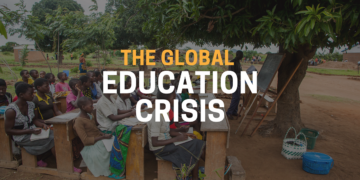
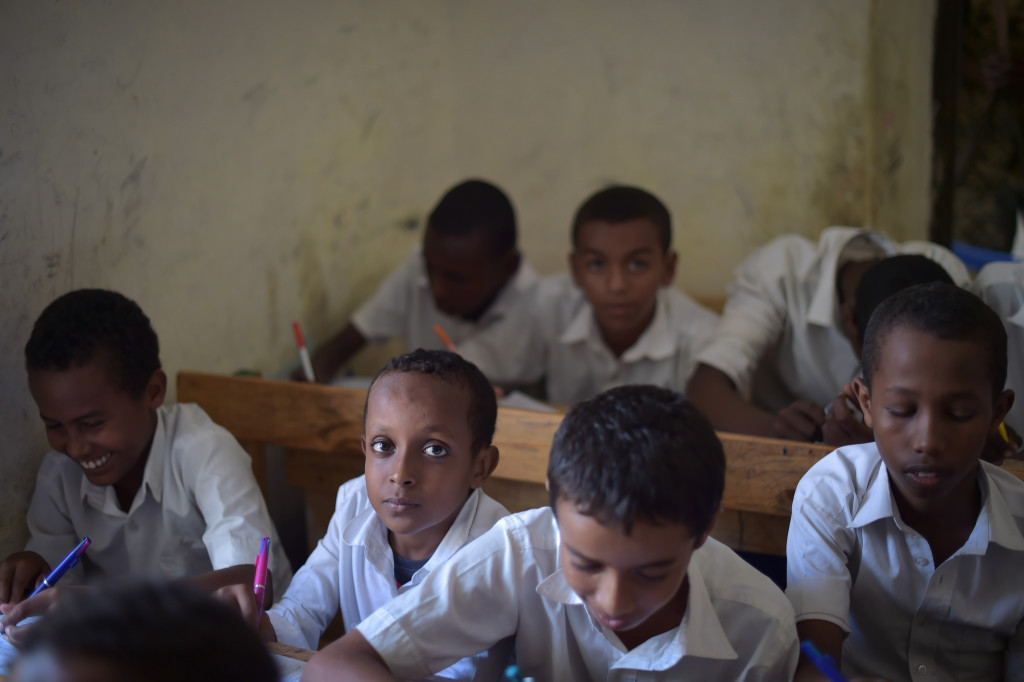
The global community is facing a stark reality: the dream of providing quality education for every child is under severe threat. A perfect storm of geopolitical fragmentation, soaring debt, and dramatic funding cuts has pushed the international education system into a state of emergency. What was once a steady march toward the United Nations’ Sustainable Development Goal 4 (SDG 4) ensuring inclusive and equitable quality education by 2030 has stalled, and in many regions, it is rapidly reversing .
Recent analysis from the United Nations Children’s Fund (UNICEF) paints a grim picture: global education aid is projected to plummet by $3.2 billion, a staggering 24% drop from 2023 levels by the end of 2026 . This disinvestment is not merely a statistic; it translates into a human crisis where millions of children will be barred from classrooms, lifelong earning potential is erased, and the stability of entire nations is compromised. This article delves into the multifaceted dimensions of this crisis, exploring its root causes, its devastating impact on vulnerable populations, and the innovative, yet challenging, pathways that might lead to a solution.
The Anatomy of the Funding Shortfall
The current crisis in global education financing is not an accident of economics but a result of shifting political priorities in donor nations. The projected $3.2 billion cut in Official Development Assistance (ODA) for education is heavily concentrated, with just three donor governments accounting for nearly 80% of the reductions . This pullback is happening despite an annual financing gap of $97 billion that low- and lower-middle-income countries face to meet their SDG 4 targets by 2030 .
If these cuts materialize fully, the number of out-of-school children worldwide could swell from 272 million to 278 million by the end of 2026. To visualize the scale, this is the equivalent of emptying every primary school in Germany and Italy combined . This regression is happening at a time when the existing multilateral architecture is already struggling. Data from 2024 indicated that the global out-of-school population had decreased by only 1% over nearly a decade, revealing the profound inadequacy of current international cooperation mechanisms .
Regional Impact and the Human Cost of Disinvestment
The burden of these cuts will not be felt equally. The harshest consequences are reserved for the regions already grappling with instability and poverty, creating a vicious cycle of disadvantage.
A. West and Central Africa: The Epicenter of the Crisis
The West and Central Africa region faces the sharpest impact, with an estimated 1.9 million children at risk of losing their educational opportunities. This region, which already contends with significant infrastructure deficits and humanitarian challenges, will see its already fragile education systems pushed to the breaking point .
B. Middle East and North Africa: Instability Worsened by Lost Learning
In the Middle East and North Africa, the situation is equally dire, with 1.4 million additional children potentially forced out of school. In conflict-affected countries like Palestine and Somalia, education is not just about learning; it is a lifeline that provides stability, protection, and a sense of normalcy for traumatized children. The cuts to education in emergencies are projected at 24% , which could strip away that lifeline for good .
C. Country-Level Devastation: The Case of Côte d’Ivoire and Mali
At the national level, the numbers are just as alarming. The analysis identifies 28 countries projected to lose at least a quarter of the education assistance they rely on for pre-primary, primary, and secondary schooling. Among them, Côte d’Ivoire and Mali are hit hardest, facing potential enrollment declines of 4% . This translates to 340,000 and 180,000 students, respectively, being pushed out of the education system .
Cascading Consequences: Beyond Just Dropping Out
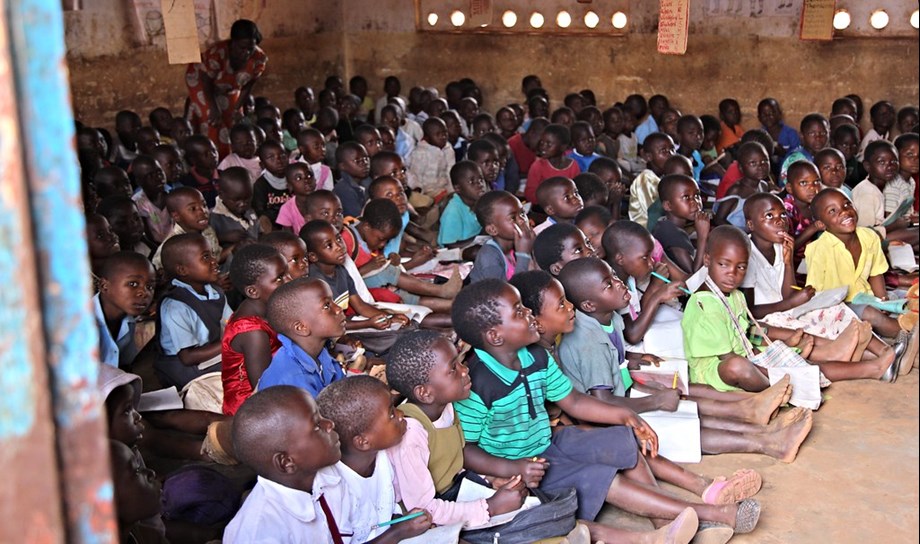
The crisis extends far beyond the headline number of children leaving school. Even for those who remain in classrooms, the quality of their education is set to deteriorate rapidly, impacting at least 290 million students across all regions . This “learning crisis” manifests in several critical ways:
-
Primary Education Under Siege: Primary education is expected to be the hardest hit globally, with funding set to fall by a third. This foundational stage is critical for future learning, and its neglect deepens the crisis permanently. The affected children are at risk of losing an estimated $164 billion in lifetime earnings, reinforcing the cycle of poverty they were meant to escape .
-
End of Lifelines: School Feeding Programs: For many children in low-income countries, a meal at school is the only nutritious food they receive all day. Funding for school feeding programs is potentially facing a catastrophic cut of 57% . This will directly impact children’s health, cognitive development, and ability to learn, leading to higher dropout rates as families see little value in sending hungry children to school .
-
Setbacks for Gender Equality: Hard-won progress in girls’ education is now in jeopardy. A projected 28% drop in funding for gender-equality initiatives threatens to reverse gains in enrollment and retention. When families face economic pressure, girls are often the first to be pulled from school, making them more vulnerable to child marriage, exploitation, and trafficking .
-
Systemic Collapse and Data Gaps: An estimated 20% cut to areas like teacher development, policymaking, and data systems will have a lasting impact. Without proper teacher training and robust data to guide evidence-based planning, governments will be flying blind. Even if funding returns in the future, the loss of skilled educators and critical data gaps will make recovery a slow and arduous process .
The Geopolitical Shift and the Failure of Traditional Multilateralism
This funding crisis is occurring against the backdrop of a fundamental shift in global governance. The traditional Western-centric model of multilateralism is giving way to a multipolar world, and education is becoming an arena for this contestation .
A. The Rise of Alternative Blocs
The expansion of BRICS (now BRICS+ including Egypt, Ethiopia, Iran, and the UAE) has created an alternative pole of influence with explicit ambitions to reshape global governance. Through mechanisms like the BRICS Network University, comprising 56 leading universities, and technical and vocational training alliances, these nations are building parallel structures that challenge the dominance of Western institutions like the OECD and the World Bank .
This fragmentation raises profound questions. Will we soon see competing international assessments—one aligned with OECD frameworks and another with BRICS epistemologies? Will a child’s qualification be recognized across geopolitical blocs, or will education become another tool for great power competition?
B. The Limits of Traditional Aid
Even before the current cuts, the traditional aid model was failing. Analysis shows that even if all Development Assistance Committee donors fulfilled their commitment to allocate 0.7% of their GDP to aid and prioritized education appropriately, it would raise an additional $29 billion—filling less than one-third of the financing gap . This arithmetic proves that the solution cannot lie in aid alone.
Domestic Financing: The Overlooked Giant
A critical, often overlooked fact is that 97% of education financing comes from domestic sources, not international aid . Therefore, the future of education depends less on foreign donors and more on the ability and willingness of low-income countries to generate and allocate their own resources.
A. The Tax Imperative
To unlock domestic funds, countries must increase their tax-to-GDP ratios. Low-income countries average a tax-to-GDP ratio of just 16% , compared to 33% in wealthy OECD nations. The Fortaleza Declaration from the 2024 Global Education Meeting suggests 15% is the minimum ratio needed, yet 34 countries in Africa fell short of this in 2024 .
Increasing this ratio by just five percentage points, as suggested by the IMF, would enable these countries to double their spending on education and health. ActionAid estimates this could raise an additional $146 billion a year for public services in Africa alone .
B. The Debt Trap
However, domestic financing is strangled by a monumental debt crisis. There are currently 54 countries in debt crisis, and over 50% of all low- and lower-middle-income countries now spend more on debt servicing than on education. African countries pay an absurdly high average interest rate of 9.8% on loans, a systemic injustice that channels scarce resources away from classrooms to creditors .
Innovative Solutions and the Path Forward
Navigating out of this crisis requires a radical shift in thinking and a willingness to embrace new mechanisms while holding traditional actors accountable.
A. Debt-for-Education Swaps
One innovative mechanism gaining traction is the debt-for-education swap. This involves converting sovereign debt into education investment. UNESCO, working with the G20, has proposed a platform where countries burdened by unsustainable debt could negotiate conversion into education investments . However, critics warn that these swaps can become a means of extending creditor control over debtor nations’ domestic policies if conditionalities are imposed that do not align with national contexts .
B. Reforming the Global Financial Architecture
The global education community is being called to “break out of its bubble” and engage in broader debates on tax, debt, and macroeconomic policy . Key demands include:
-
A UN Framework Convention on Tax: To ensure fair and progressive tax rules that prevent profit shifting by multinational corporations and enable sustainable revenue collection .
-
A UN Framework Convention on Sovereign Debt: To establish binding principles on responsible borrowing and lending and create fairer processes for debt restructuring. This could unleash hundreds of billions of dollars for investment in public services .
-
Challenging Austerity: The global community must demand a sustained dialogue with the IMF, whose policy advice often defaults to austerity, leading to cuts or freezes in public sector wage bills—the largest component of which is usually teachers’ salaries .
C. Human-Centered Digital Transformation
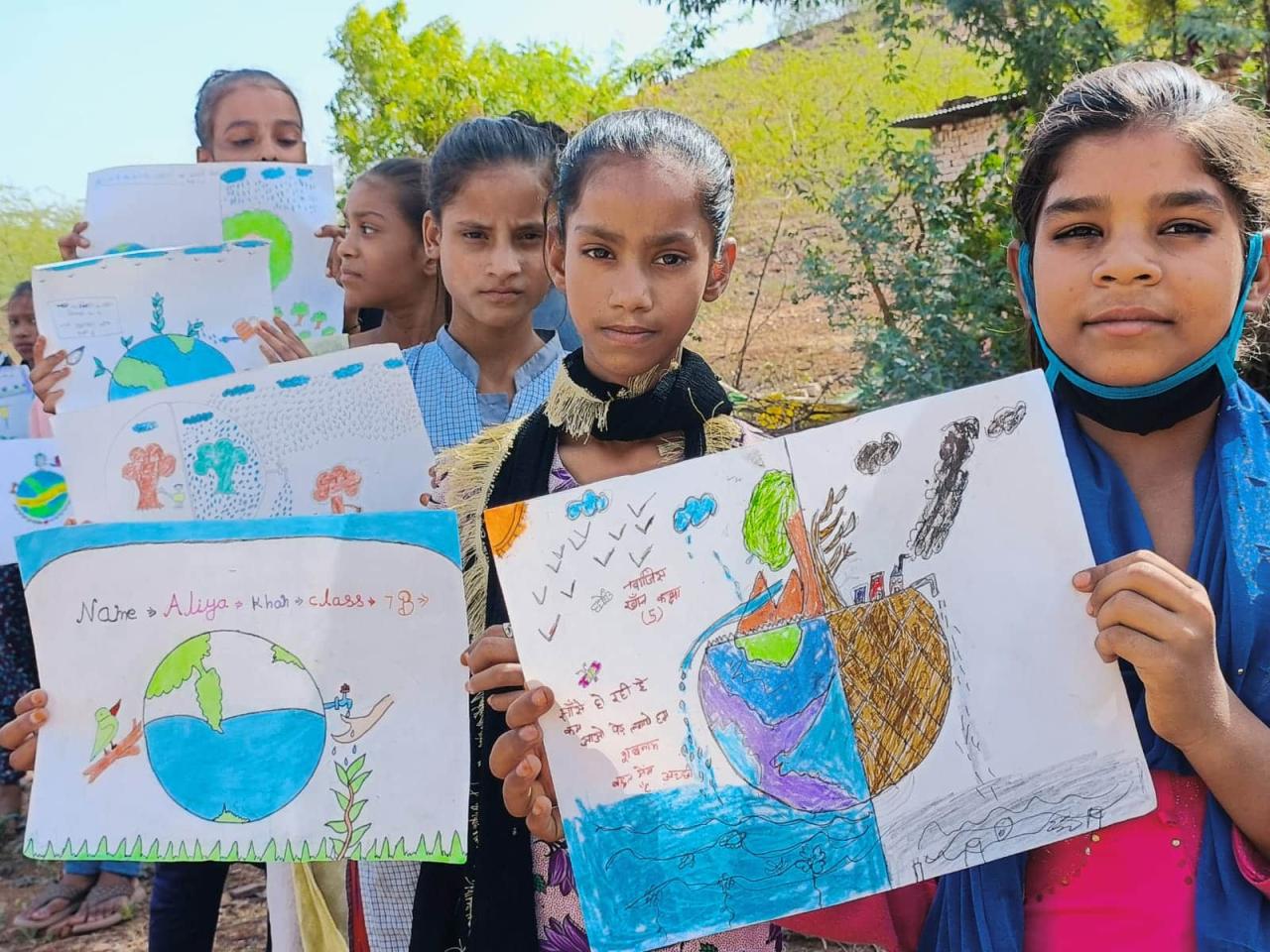
As the world moves online, the digital divide becomes an educational divide. Providing internet, electricity, devices, and teacher training for low- and lower-middle-income countries would require a staggering $183 billion . Initiatives like the one in Kenya, where the World Bank is partnering with the government to boost ICT uptake in schools, show promise . However, these efforts must be “human-centered” and transparent, ensuring that technology does not become a vehicle for commercializing public education or shifting costs onto the poorest families .
Conclusion: A Call for Political Will
The global education aid crisis is a symptom of a deeper malaise: a lack of political will to prioritize children’s futures. The technical solutions innovative financing, digital platforms, and data monitoring already exist. What is lacking are the political decisions to redistribute resources, decolonize knowledge, and democratize global governance .
As the Director-General of UNICEF stated, “Every dollar cut from education is not just a budgetary decision, it’s a child’s future hanging in the balance” . With only a few years remaining until the 2030 SDG deadline, the world stands at a crossroads. It can choose fragmentation, allowing new inequalities to replace old ones, or it can summon the collective will to build a genuine global governance structure that ensures every child, regardless of where they are born, has the opportunity to learn, grow, and thrive . The answer lies not in the architecture of institutions, but in the moral courage to act.