The landscape of education is undergoing a profound transformation. For decades, the traditional classroom model has operated on a one-size-fits-all premise, expecting a classroom of 20 to 30 students to absorb the same material, at the same pace, in the same way. This approach often leaves some students bored, others lost, and many disengaged . However, the rise of Educational Technology (EdTech) , particularly applications designed for personalized learning, is dismantling this outdated model. By harnessing the power of artificial intelligence (AI) , data analytics, and adaptive algorithms, these tools are creating learning experiences that are as unique as the individuals having them. This article delves deep into how EdTech apps are personalizing education, the technologies driving this shift, real-world examples, benefits, challenges, and what the future holds for learners and educators in 2025 and beyond.
Understanding the Core Concept: What is Personalized Learning?
Before exploring the tools, it is crucial to define the concept they aim to facilitate. Personalized learning is an educational approach that seeks to tailor instruction, content, pace, and learning environment to meet the individual needs, skills, and interests of each learner . It moves away from a model where the teacher is the sole distributor of information to one where they act as a facilitator, guiding students on their individual paths.
The United States National Education Technology Plan offers a clear definition: personalized learning refers to instruction in which the pace of learning and the instructional approach are optimized for the needs of each learner. Learning objectives, instructional approaches, and content may all vary based on learner needs . This concept isn’t entirely new—its roots can be traced back to educational theories like Bloom’s two-sigma problem and mastery learning from the 1960s and 70s . However, what has changed is the capability of technology to execute this vision on a mass scale.
Technology serves as the great enabler. As one expert noted, the mission to personalize education can only succeed through partnering closely with schools and educators, empowering them with tools to understand and teach every student based on their needs, not just to the median level . EdTech apps are the vehicles making this partnership possible.
The Engine of Personalization: Key Technologies in EdTech Apps
Modern EdTech apps are not simple digital worksheets. They are complex ecosystems driven by several key technologies that work in concert to create a dynamic and responsive learning environment.
A. Artificial Intelligence (AI) and Machine Learning (ML)
AI is the brain behind personalized learning. Machine learning algorithms analyze vast amounts of data on student performance to identify patterns, predict outcomes, and make intelligent decisions about the next steps in a student’s learning journey . For instance, if a student consistently struggles with fractions, the AI will recognize this not as a single failure but as a pattern, and it will adjust the curriculum to provide remedial content on that specific topic before allowing the student to progress.
B. Adaptive Learning Algorithms
These are the practical application of AI. Adaptive learning platforms use rule-based logic and analytics to change the learning path in real-time . As a student answers questions, the software assesses not just if the answer is right or wrong, but how the student arrived at that answer, how long they took, and what concepts they seem to misunderstand. Based on this, it dynamically adjusts the difficulty level, provides hints, or offers new explanations. This ensures students are constantly working within their “zone of proximal development”—the space where the challenge is difficult enough to be engaging but not so hard that it leads to frustration .
C. Data Analytics and Dashboarding
The power of personalization is worthless without insights. EdTech apps provide comprehensive dashboards for teachers, parents, and students . These dashboards translate complex performance data into visual, easy-to-understand metrics. Educators can see, at a glance, which students are excelling, who is falling behind, and what concepts the entire class is struggling with. This allows for data-driven instruction, where teachers can form targeted small groups or provide one-on-one intervention precisely where it is needed most.
Types of Personalization in EdTech: From Pace to Modality
Personalization in EdTech apps manifests in several distinct ways, catering to the multifaceted nature of learning differences.
A. Pacing
This is the most fundamental form of personalization. Apps allow students to learn at their own speed. A student who grasps a concept quickly can move on to more challenging material without waiting for classmates, while a student who needs more time can review concepts, practice with additional exercises, and achieve mastery before advancing . This is a core feature of platforms like Khan Academy and IXL.
B. Learning Path and Content
Beyond just pace, apps can alter the sequence and type of content a student sees. For example, if a student demonstrates mastery of a concept through a pre-test, the app might skip the introductory lesson and move them straight to application. Alternatively, the app might offer different content modalities based on demonstrated need or preference, such as a video explanation for one student and a text-based summary for another .
C. Learning Modalities and Styles
While the scientific validity of fixed “learning styles” (e.g., visual, auditory, kinesthetic) is debated, it’s clear that learners benefit from multiple means of representation . Modern EdTech apps excel at this by offering multimodal learning experiences . A single lesson might include a short video (visual/auditory), an interactive simulation (kinesthetic), a podcast to listen to (auditory), and a text passage (visual). This hybrid approach ensures that all students can engage with the material in a way that resonates with them, increasing retention and engagement .
D. Feedback and Assessment
Personalized feedback is a game-changer. Instead of waiting days for a graded test, students receive instant feedback on their work. AI-powered tools can now evaluate not just multiple-choice questions, but also written responses, problem-solving steps, and even coding assignments, providing immediate, constructive guidance . This rapid feedback loop helps solidify learning and correct misunderstandings in real-time.
Spotlight on Success: Leading Examples and Applications
The theory of personalized learning is being brought to life by a host of innovative applications, each tackling personalization from a unique angle.
-
DreamBox Learning (Mathematics): A pioneer in adaptive learning, DreamBox analyzes not just right answers but the strategies students use to solve problems. It offers real-time feedback and adjusts the difficulty and sequence of lessons accordingly. Teachers receive actionable insights to guide their instruction .
-
Khan Academy (General Subjects): Khan Academy allows learners to practice at their own pace, filling gaps in understanding and then accelerating their learning. Its mastery learning system ensures students have a firm foundation in key concepts before moving on to more advanced topics .
-
Flint (AI-Powered Tutoring): Flint is a newer entrant focused on empowering teachers to create personalized AI tutors. Students can use it for historical role-play simulations, language conversation practice, coding assistance, and writing guidance. It was born from the idea that AI makes true personalization possible without risking teacher burnout .
-
Duolingo (Language Learning): Duolingo uses a highly personalized approach to language learning. It adapts lessons based on user performance, uses spaced repetition to reinforce vocabulary, and provides instant feedback on exercises. Its gamified approach keeps learners motivated and engaged .
-
Mindspark (Remedial Learning): Used extensively in India, Mindspark is an adaptive tutoring tool designed to identify and correct common misconceptions in math and language. Its effectiveness in improving learning outcomes in low-resource settings demonstrates the global power of personalized EdTech .
The Symbiotic Relationship: Technology Empowering, Not Replacing, Teachers
One of the most significant concerns about the rise of EdTech is the fear that it will replace teachers. The evidence, however, points to a different reality: EdTech is a tool to empower teachers, not replace them .
The core of this relationship is the shift from administrative to instructional tasks. Traditionally, teachers spend a massive amount of time on grading, lesson planning for different levels, and tracking student progress manually. EdTech automates these tasks. AI handles the grading, the software adapts the lessons, and the dashboards do the tracking.
This frees the teacher to focus on what truly matters: human connection, mentorship, and deep, targeted instruction. With the data provided by the apps, teachers can identify the “stuck” points for individual students and spend their time providing the nuanced, empathetic, and creative support that no algorithm can replicate. As one EdTech leader put it, the mission can only succeed by partnering with educators who have dedicated their lives to shaping young minds . The teacher’s role evolves from a “sage on the stage” to a “guide on the side.”
Navigating the Hurdles: Challenges and Considerations in 2025
Despite its immense promise, the path to fully personalized learning through EdTech is not without significant challenges. A recent high-profile failure of a tech-forward school in Texas serves as a stark warning . The school’s attempt to replace teachers with software collapsed due to several critical issues:
-
The Digital Divide and Equity: Not all students have equal access to reliable internet or quiet learning spaces at home. A heavy reliance on software can inadvertently widen the achievement gap for students from lower socioeconomic backgrounds .
-
Data Privacy and Security: Personalized learning apps collect a staggering amount of sensitive data on students, from performance metrics to behavioral patterns. This raises serious concerns about data privacy, compliance with laws like FERPA and GDPR, algorithmic bias, and the potential for misuse of student information .
-
Over-Automation and the Loss of Human Touch: The Texas experiment showed that students struggled without consistent, expert human instruction, especially in complex areas like writing and science labs. Software cannot replicate the inspiration, classroom management, and emotional support a skilled teacher provides . Aides and coaches cannot replace experienced teachers for managing complex questions and behaviors.
-
Implementation and Integration Costs: Implementing adaptive learning platforms is expensive. Schools face costs for software licenses, hardware, training, and ongoing support. The promised cost savings often fail to materialize in the short term, putting a strain on budgets .
-
Lack of Clear Evidence: While some studies show gains, the overall evidence for large-scale effectiveness is mixed. The OECD has reported that heavy computer use does not automatically improve reading or math and can hinder results without strong teaching .
The Future Horizon: Trends Shaping Personalized Learning
Looking ahead, the evolution of personalized learning will be shaped by several key trends.
1. Hyper-Personalization with AI: Future AI will move beyond simple right/wrong analysis to understand student emotions, engagement levels, and even boredom through facial recognition or keystroke patterns. This will allow for even more nuanced interventions. The global adaptive learning platform market is projected to grow from $5.50 billion in 2025 to $19.38 billion by 2032, indicating massive investment in this area .
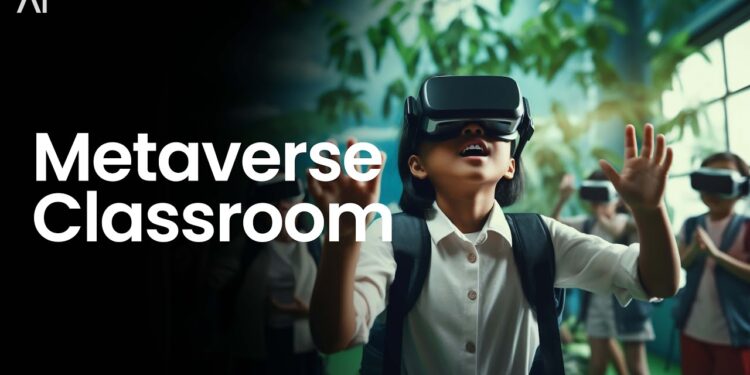
2. Immersive Learning with VR and AR: Virtual Reality (VR) and Augmented Reality (AR) will take experiential learning to new levels. Imagine students learning about ancient Rome by walking through a virtual recreation or understanding physics by manipulating 3D objects in space . This offers a deeply personalized and engaging way to grasp abstract concepts.
3. Blended and Hybrid Models as the Standard: The future is not about choosing between online and in-person, but blending them effectively. The goal will be to use EdTech for what it does best (practice, assessment, data collection) and in-person time for what it does best (discussion, projects, human connection) .
4. Focus on Lifelong Learning and Skills: EdTech personalization is not just for K-12. There is a growing market for platforms that personalize professional development and corporate training, helping adults acquire new skills and earn micro-credentials in a rapidly changing job market .
Best Practices for Implementing Personalized Learning with EdTech
For educators and parents looking to maximize the benefits of EdTech, a strategic approach is essential.
-
Set Clear Learning Goals: Choose apps and platforms that align with specific learning objectives, not just for entertainment value .
-
Balance Screen Time with Human Interaction: Ensure technology is a tool for learning, not a babysitter. Encourage hands-on projects, discussions, and outdoor activities alongside tech-based lessons.
-
Monitor Progress Together: Use the data dashboards as a conversation starter. Regularly review a child’s progress with them to set goals and celebrate achievements .
-
Advocate for Data Privacy: Be an informed consumer. Ask questions about how student data is collected, used, and protected by EdTech vendors .
-
Focus on Pedagogy First: Technology should always serve the teaching, not the other way around. The best results come from a strong teacher using technology intentionally, not from a software-driven curriculum that sidelines educators .
Conclusion
EdTech apps are fundamentally reshaping the educational landscape, turning the long-held dream of personalized learning into a tangible reality. By leveraging AI, adaptive algorithms, and data analytics, these powerful tools can meet students where they are, tailor content to their unique needs, and empower teachers with unprecedented insights. The journey is not without its challenges equity, privacy, and the risk of dehumanization are real concerns that require careful navigation. However, when implemented thoughtfully, with the teacher-student relationship at its core, personalized learning technology holds the key to creating a more engaging, effective, and equitable educational experience for every learner. The future of education is not a one-size-fits-all lecture; it is a dynamic, responsive, and deeply personal journey of discovery, powered by EdTech.