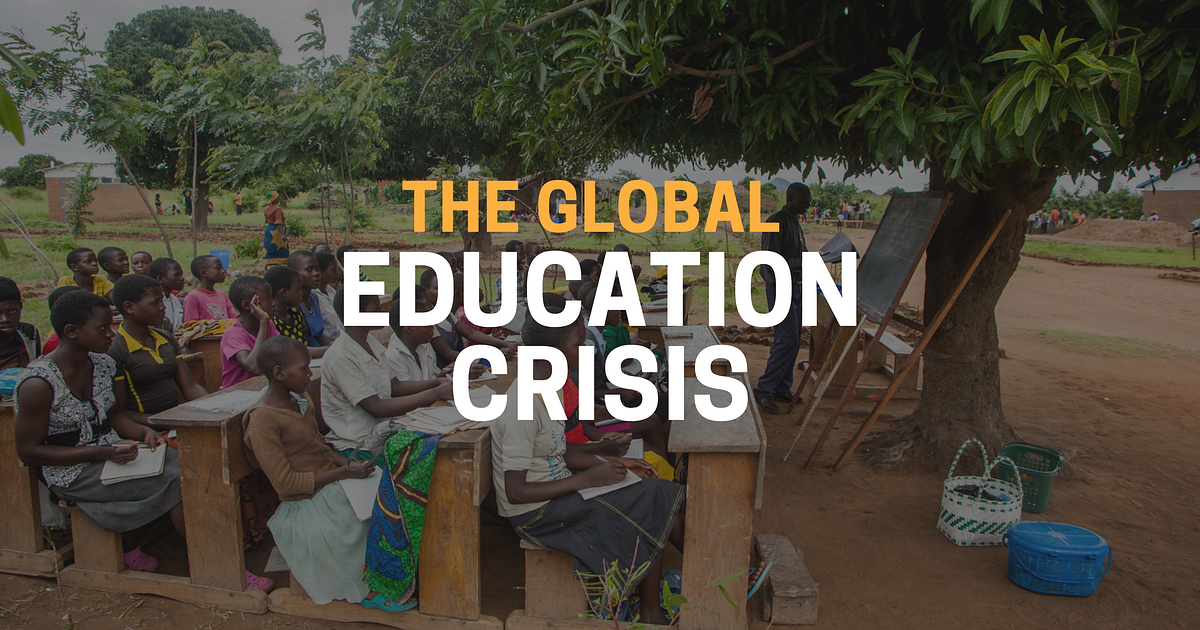
For decades, the world has championed the cause of getting children into school. From the Millennium Development Goals to the Sustainable Development Goals, massive strides have been made in enrollment rates across low- and middle-income countries (LMICs) . Yet, a harsh reality has dawned on educators, policymakers, and parents alike: attendance does not equal learning. We are facing a profound “learning crisis” a phenomenon where millions of children sit in classrooms daily but fail to acquire basic foundational skills in literacy and numeracy. The World Bank estimates that in the poorest countries, 90% of children cannot read a simple text by age 10 . This crisis threatens not only individual futures but also the economic prosperity and stability of entire nations. Solving this crisis requires moving beyond simplistic fixes and embracing a multi-faceted, context-driven approach that addresses systemic failures, empowers teachers, and redefines what success looks like in public education.
I. Deconstructing the Crisis: It’s More Than a Test Score
To solve the learning crisis, we must first understand its true nature. It is not merely a dip in test scores post-COVID-19, but a deep-seated structural issue rooted in variability, perception, and systemic inequity.
A. The Widening Chasm of Learner Variability
One of the most significant challenges facing modern classrooms, particularly in LMICs, is extreme learner variability. It is not uncommon to find a single classroom where students range from being five to six grade levels apart in their actual knowledge . A teacher might have to simultaneously cater to a child struggling to identify letters and another ready to analyze complex texts. This gap is often exacerbated by socio-economic factors. Many students are first-generation learners who receive little to no academic support at home. Research consistently links a parent’s education level especially the mother’s to a child’s early readiness for school . Despite this reality, most national curricula are rigid and designed for an imaginary “average” student. When teachers are forced to “teach to the middle,” advanced students become bored and disengaged, while those who are behind fall further into the abyss of academic failure.
B. The Perception Gap: When Parents and Teachers Don’t See the Problem
The crisis is often invisible to those closest to it. In the United States, despite overwhelming evidence of pandemic-related learning loss, a 2023 survey revealed that nearly nine out of ten parents believed their children were performing at or above grade level . This is not a sign of parental denial, but a failure of communication. Traditional report cards and grades often obscure a child’s true proficiency, creating an “illusion of learning.” If families are not given timely, accurate, and understandable data, they assume the system is functioning correctly.
Similarly, teachers, overwhelmed by large class sizes and a lack of real-time assessment tools, may overestimate the abilities of struggling students. A teacher’s perception of a student’s innate “intelligence” can sometimes cloud their judgment about that student’s actual test performance, leading to lower expectations and a lack of targeted intervention . This “perception gap” means that the urgency for reform is often felt only by those analyzing the macro-data, not by the families and educators living the day-to-day reality.
C. The Epistemology of Crisis: A Critical View
It is also vital to critically examine the “crisis” narrative itself. Some scholars argue that the way international governmental organizations (IGOs) from the Global North frame the “learning crisis” can be problematic . By focusing on narrow, technical solutions and standardized metrics, these narratives sometimes mask deeper structural and geopolitical inequities. The crisis is often presented as a series of deficits within the Global South, with solutions being “best practices” imported from the West. This “crisis epistemology” can legitimize short-term interventions that ignore the specific socio-economic and cultural contexts, inadvertently perpetuating cycles of dependency . A truly effective response must be decolonized, contextually grounded, and led by local leadership and innovation.
II. The Pillars of an Effective Response
Moving from diagnosis to action requires a coordinated strategy that targets the key levers of educational quality. Based on insights from global experts and successful case studies, a comprehensive response must rest on the following pillars.
A. Redefining and Utilizing Data: Measure What Matters in Real-Time
The first step in solving the crisis is to illuminate it with the right kind of light. We cannot rely solely on high-stakes, end-of-year exams that provide data when it is too late to help the student.
-
Real-Time Formative Assessment: Teachers need simple, effective tools to assess where students are today. This means integrating quick, low-stakes checks for understanding into daily lessons. The goal is not to grade students but to gauge the effectiveness of the instruction and identify who needs help immediately.
-
Student Growth Percentiles (SGPs): Instead of only measuring proficiency against a fixed standard, education systems should track student growth. SGPs measure how much progress a student has made compared to their peers who started at the same level . For example, if a student was in the 20th percentile last year and is now in the 35th percentile, that shows significant growth. This method provides a more equitable and motivating picture of success, especially for students who start far behind. It allows for responsive, real-time decision-making in schools.
-
Making Data Accessible: Data is useless if it sits in a spreadsheet. Information about student progress must be translated into plain language and shared with teachers and parents immediately. If a reading assessment shows a child struggles with phonics, the teacher needs a suggestion: “Here are three activities to try tomorrow.” If families see that their child is falling behind in real-time, they are more likely to become partners in the solution .
B. Empowering Teachers as the Backbone of Reform
Teachers are not the problem; they are the primary solution. The conversation must shift from “holding teachers accountable” to “supporting teachers to succeed” . This requires a holistic overhaul of the teacher experience.
-
Setting Clear Expectations and Matching Roles: Teachers thrive when they have well-defined standards, actionable guidance, and a structured curriculum. In low-resource settings, manageable class sizes and clear goals are not luxuries but necessities. Furthermore, effective teachers must be strategically placed in the highest-need schools, supported by incentives to work in the most challenging environments .
-
Rethinking Recruitment and Training: Traditional credentials are not always reliable predictors of classroom effectiveness. Performance-based hiring and hands-on, practice-focused training residencies similar to medical residencies can better prepare teachers for the realities of the classroom . This includes extensive practice in managing learner variability and using formative assessment.
-
Growth-Focused Incentives: Motivation structures must evolve. Pay-for-performance and contract teaching models can be effective if they are tied to student growth (rather than just years of service), are equitable, and focus on factors within a teacher’s control .
-
Teacher Wellbeing as a Prerequisite: In crisis and displacement settings, teacher wellbeing is paramount. Programs like the Norwegian Refugee Council’s Better Learning Programme (BLP-T) focus on self-care and resilience for teachers. A traumatized or burnt-out teacher cannot effectively support students. Addressing the psychosocial needs of educators is a critical, often overlooked, component of quality education .

C. Personalization: Cracking the Code of Large-Scale Instruction
Learner variability demands personalized instruction. While this seems daunting in a classroom of 50 or 60 students, advances in understanding pedagogy and technology offer a path forward.
-
Teaching at the Right Level (TaRL): One of the most effective low-tech solutions is the TaRL methodology, which involves grouping students based on their learning level rather than their age or grade. Developed in India, TaRL has been scaled across Africa, demonstrating dramatic improvements in basic reading and math skills . It empowers teachers to temporarily set aside the grade-level curriculum to focus on foundational skills.
-
The Role of Technology: AI and big data are making personalization more achievable. However, technology is just an enabler. The goal is to provide teachers with actionable insights. Effective technology use means:
-
Generating differentiated content and activities based on baseline analysis.
-
Delivering insights in plain language, not complex data dumps.
-
Linking data directly to classroom decisions, such as forming small, focused groups for specific skill instruction .
-
III. Learning from Success: Case Studies in Transformation
Abstract principles come to life when we examine programs that are successfully navigating the crisis.
A. Africa’s Accelerated Learning Programmes (ALPs)
A recent study of Accelerated Learning Programmes in Ethiopia, Liberia, and Ghana provides a powerful counter-narrative to the deficit-focused view of African education . These programs Ethiopia’s Speed Schools, Ghana’s Complementary Basic Education (CBE), and Liberia’s Second Chance Programme achieved deep, lasting learning for children who had dropped out or fallen behind. Their success was built on twelve interlinked principles that offer a blueprint for reform:
-
Linguistic Relevance: Ghana’s CBE program systematically mapped local languages, ensuring instruction began in the language children spoke at home. This practice produces measurably stronger early literacy outcomes. UNESCO reports that in Africa, children taught in a familiar language are 30% more likely to read with understanding by the end of primary school .
-
Community as Partner: These programs treated communities as partners, not recipients. They established community oversight committees and recruited facilitators locally, ensuring the program remained culturally grounded and accountable.
-
Holistic Learning: Liberia’s program explicitly cultivated a sense of safety, belonging, and agency. This “Ubuntu” philosophy emphasizing empathy and collective responsibility was the foundation upon which academic progress was built .
-
Trusting Teachers: Ethiopia’s Speed Schools granted facilitators the professional autonomy to adapt lessons based on children’s needs, supported by strong peer collaboration and reflection groups. This proved far more effective than rigid, scripted lessons.
B. Addressing Trauma in Crisis Settings: The Better Learning Programme (BLP)
In 35 countries, the Norwegian Refugee Council’s BLP demonstrates that psychosocial support is not separate from learning—it is a prerequisite for it. For the 50 million displaced children worldwide, trauma and stress are significant barriers to cognitive function. The BLP is a tiered intervention that mobilizes educators to create safe learning environments. From classroom-based interventions (BLP-1) to targeted help for trauma-induced nightmares (BLP-3), the program shows that addressing a child’s emotional state is essential for unlocking their academic potential. An average of 69% of participants report improved psychosocial wellbeing, proving that healing and learning go hand in hand .
IV. Financing and Scaling the Future
Even the best programs will fail if they cannot be scaled sustainably. The fiscal reality is stark: an estimated $97 billion is needed annually to fund learning and skills in low and lower-middle-income countries, just as traditional aid flows are tightening .
A. Unlocking Innovative Funding
The funding gap, while massive, is not insurmountable. Innovative financing mechanisms are key. The International Finance Facility for Education (IFFEd) is a game-changing model that blends grants and guarantees from donors and multilateral development banks. For every $140 million invested, IFFEd can generate $1 billion in concessional financing for education, a leverage of 7x. This means the $97 billion gap could theoretically be closed with just $14 billion in strategic public investment .
B. Prioritizing Efficiency and Evidence
With scarce resources, we must invest in what works. The Global Education Evidence Advisory Panel classifies interventions as “Great Buys,” “Good Buys,” and “Bad Buys.” A key “Great Buy” is structured pedagogy—providing teachers with lesson plans, materials, and ongoing coaching. This is far more effective and cost-efficient than simply buying textbooks or reducing class sizes in isolation .
-
Focus on Early Childhood: Investment in early childhood education yields the highest returns. Nobel laureate James Heckman’s research shows a return on investment of up to $13 for every $1 spent on early childhood programs, due to long-term gains in health, education, and reduced social costs .
-
Low-Cost, High-Impact Interventions: Simple “nudge” techniques, like sending SMS reminders to parents about school attendance or upcoming assignments, have been shown to boost student engagement in countries like Kenya at a minimal cost .
C. Building Sustainable Ecosystems
Short-term pilot projects are not enough. Lasting change requires building sustainable ecosystems within government.
-
Government Ownership: Real, long-term change must come from within government systems. Non-governmental organizations should play a facilitative role, working to strengthen government capacity rather than creating parallel systems .
-
Embedding Expertise: Ministries of Education need top-tier technical experts embedded within their teams to lead policy design and implementation. Fostering this internal expertise ensures that reforms are sustained beyond the tenure of any one political administration or funding cycle .
-
Replication and Scaling: Proven interventions must be scaled through smart partnerships. The success of models like TaRL, which moved from a local innovation in India to a scaled program across Africa, shows the power of adaptable, evidence-based replication .
 Conclusion: A Collective Mission with a Clear Path
The learning crisis is the most pressing challenge of our time, a silent emergency that robs millions of their potential and perpetuates cycles of poverty. Yet, the path forward is not shrouded in mystery. It is illuminated by the hard-won lessons from classrooms in Kanchipuram, Addis Ababa, and São Paulo. We know that solving the crisis requires moving beyond the illusion of learning and embracing uncomfortable truths about learner variability and systemic failure. It demands that we empower teachers with support, autonomy, and respect, rather than blame. It calls for a radical commitment to personalization, whether through high-tech data analysis or the brilliantly simple low-tech approach of Teaching at the Right Level.
The solutions from Ghana, Ethiopia, and Liberia prove that deep learning is possible, even under conditions of scarcity, when education begins with the child’s world their language, their community, and their reality. By coupling these proven pedagogical approaches with innovative financing and a relentless focus on efficient, government-led implementation, we can turn the tide. The learning crisis is not a problem we have to live with; it is a challenge we have the tools to solve. The only question that remains is whether we have the collective will to act.