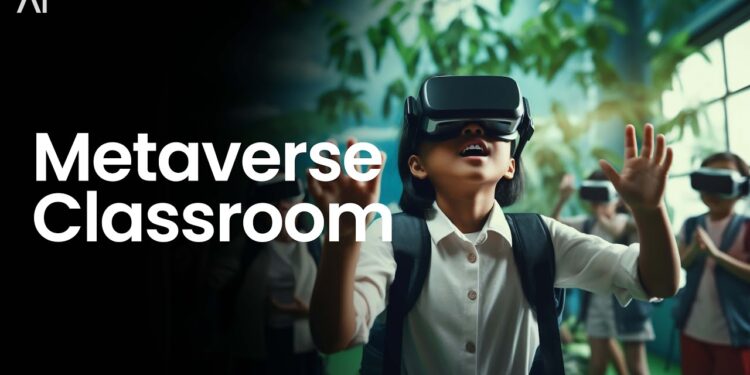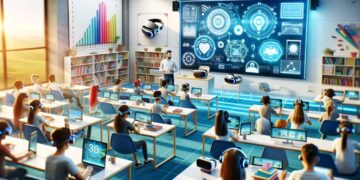
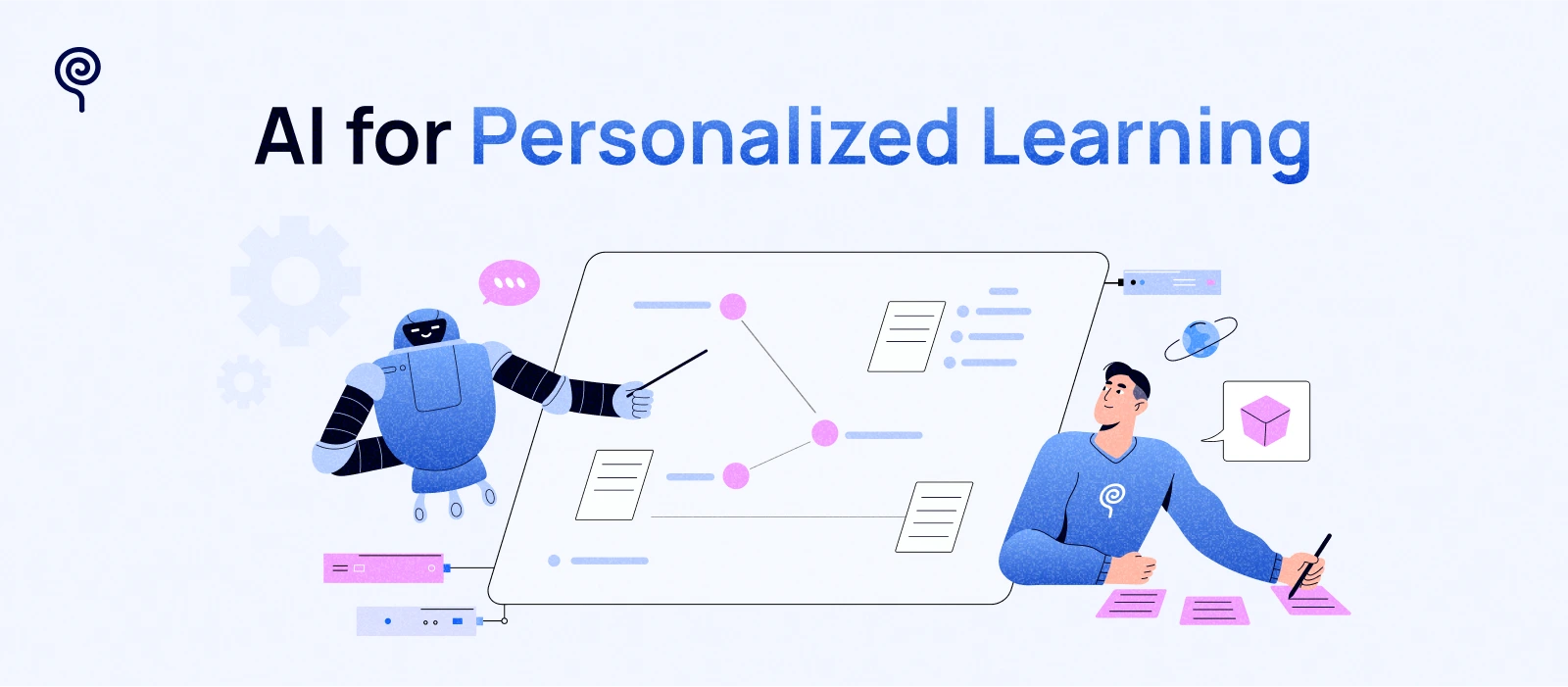
The landscape of education is undergoing its most significant transformation since the printing press. The AI personalized learning revolution represents a fundamental shift from the one-size-fits-all industrial model of education to a system where every student can learn through a uniquely tailored pathway. As generative artificial intelligence (GenAI) permeates classrooms from primary schools to prestigious universities, it promises to unlock human potential in unprecedented ways. However, this revolution is not without its complexities, challenges, and inherent risks. Drawing on the latest research from the OECD, the European Commission’s Joint Research Centre, and pioneering academic institutions, this comprehensive exploration delves into how AI is reshaping how we teach, how we learn, and what it means to be educated in the twenty-first century .
Section 1: Understanding the AI Personalized Learning Revolution
1.1 Defining Personalized Learning in the Age of AI
Personalized learning has long been the “holy grail” of education. Traditionally, it meant tutoring or small-group instruction where a teacher could adapt explanations to a student’s specific needs. However, scaling this was impossible—until now. The AI personalized learning revolution leverages generative AI to create instructional experiences that adapt in real-time to individual learners’ cognitive abilities, prior knowledge, interests, and even emotional states .
Unlike the rigid, rule-based educational software of the past, modern AI systems utilize large language models (LLMs) and machine learning algorithms to understand context, nuance, and student intent. A systematic review published in IEEE Xplore analyzing studies from 2022 to 2024 confirms that generative AI excels at creating “precise personalized feedback and dynamically generates multimodal learning materials, significantly enhancing students’ learning efficiency and engagement” . This means that instead of clicking through pre-programmed multiple-choice questions, students can now engage in genuine dialogue with an AI that understands their confusion and responds accordingly.
1.2 The Technological Underpinnings
At the heart of this revolution are several key technologies working in concert. Natural Language Processing (NLP) allows AI to understand and generate human-like text, enabling conversational tutoring. Machine learning algorithms analyze vast datasets of student interactions to identify patterns and predict optimal learning pathways. Systems like Think Academy’s “Class+,” debuted at CES 2026, combine advanced Optical Character Recognition (OCR) with proprietary “MathGPT” engines and Item Response Theory–based algorithms to evaluate handwritten responses and surface targeted insights for teachers .
These technologies represent a significant leap forward. Where early intelligent tutoring systems followed “fixed dialogue trees,” contemporary GenAI can employ sophisticated pedagogical techniques such as Socratic questioning, probing students with thoughtful queries that promote critical thinking rather than simply providing answers .
Section 2: Transformative Applications in Learning
2.1 Immersive and Experiential Learning
Perhaps the most exciting development in the AI personalized learning revolution is the ability to create immersive learning experiences that were previously impossible. The OpenAI Academy recently highlighted a compelling example involving Conor Grennan, chief AI architect at NYU’s Stern School of Business, and his 16-year-old son Finn. When studying 19th-century German immigration to New York, Finn didn’t just read a textbook. He asked ChatGPT to become “Heinrich,” a fictional immigrant from Düsseldorf. Together, they stepped off a boat into bustling 1800s Manhattan, navigating the Lower East Side and searching for work in the meatpacking district .
“It never occurred to me that people could embed themselves in history like that,” Grennan remarked. “It’s just a crazy and amazing thing.” This approach transforms abstract historical facts into lived experiences, creating what Grennan calls “sticky, story-rich learning environments.” The same technique can be applied across disciplines—turning cell biology into a Marvel movie where organelles are superheroes and villains, or reimagining Hamlet as a conversation in a Brooklyn coffee shop .
2.2 Adaptive Content Generation and Feedback
The systematic review published in ScienceDirect confirms that AI-driven personalization improves learning effectiveness compared to traditional methods. The research, which analyzed 25 Scopus-indexed articles from 2019 to 2024, found a rapid shift from early rule-based systems to sophisticated models integrating machine learning, natural language processing, and large language models. These systems provide adaptive learning pathways and real-time feedback that keep students in their optimal zone of challenge not so difficult as to cause frustration, nor so easy as to induce boredom .
In practice, this means that a student struggling with algebra receives additional scaffolded practice with more detailed explanations, while a peer who has mastered the concept moves on to enrichment activities or real-world application problems. The AI continuously assesses mastery through subtle indicators within the dialogue, adjusting the curriculum dynamically without waiting for a formal test.
2.3 Supporting Collaborative Learning
Contrary to concerns that AI isolates learners, emerging research indicates that GenAI can enhance collaborative learning. The OECD Digital Education Outlook 2026 notes that AI can serve multiple roles in group settings: as an information hub, a generator of personalized materials for each group member, a provider of feedback to the teacher about group dynamics, and even as a peer contributor in小组 tasks . This multifaceted support helps students develop not only subject-matter knowledge but also crucial teamwork and communication skills. Preliminary studies suggest that while AI produces modest improvements in straightforward knowledge acquisition, its impact on critical thinking and collaboration is significantly more pronounced .
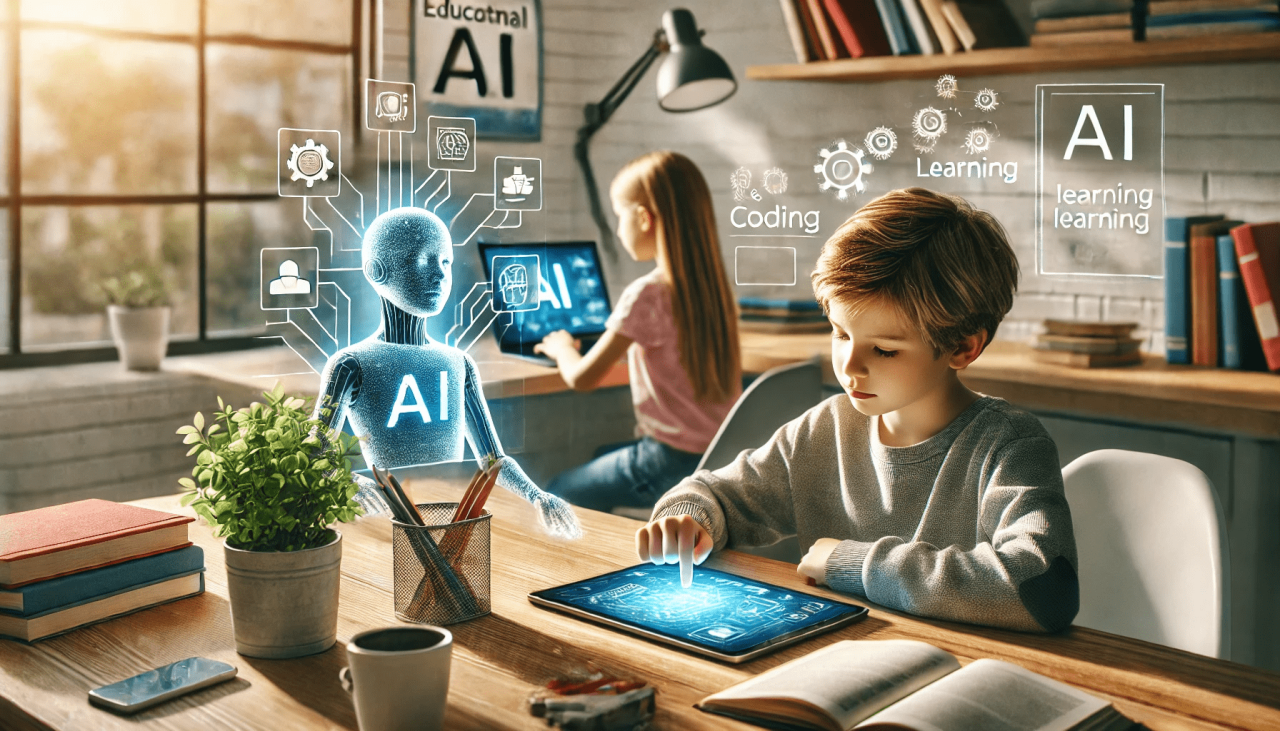
Section 3: Reshaping the Teaching Profession
3.1 Enhancing Teacher Productivity
One of the most immediate and measurable impacts of the AI personalized learning revolution has been on teacher workload. Teaching is a profession plagued by burnout, largely due to the hours spent on lesson planning, grading, and administrative tasks—time that could otherwise be spent directly with students. The OECD’s rigorous research, including a randomized controlled trial involving 259 teachers in England, found dramatic improvements: after receiving practical guidance, teachers reduced lesson planning and resource preparation time by an average of 31 percent, with weekly planning dropping from 81.5 minutes to just 56.2 minutes . Crucially, this efficiency gain came without any measurable decline in teaching quality.
Teachers across Europe report using GenAI to speed up administrative work, create tailored learning resources for students with diverse needs, and design differentiated tasks that address varying ability levels within a single classroom. A Joint Research Centre study across Finland, Germany, Ireland, Luxembourg, and Spain found that early-adopting teachers were already experimenting with these tools to enhance their practice .
3.2 The Augmentation Model: Humans and AI Working Together
A critical framework emerging from the research distinguishes between three possible relationships between teachers and AI: replacement, complementarity, and augmentation. The OECD strongly advocates for the augmentation model, where teachers and AI work collaboratively, “mutually评议 and continuously optimizing output” . This approach maximizes educational outcomes while preserving the irreplaceable professional judgment of educators.
Why is human judgment so crucial? Research consistently shows that while AI tutors approach human accuracy in subject-matter instruction, they fall short in areas requiring emotional intelligence. Students still prefer feedback from human teachers, finding it more meaningful and trustworthy . Teachers provide emotional support, motivation, and social-emotional learning (SEL) that machines cannot replicate. The AI personalized learning revolution, therefore, is not about replacing teachers but about liberating them from drudgery so they can focus on what humans do best: inspiring, mentoring, and connecting with young people.
3.3 Essential AI Literacy for Educators
As AI becomes ubiquitous, teachers need new competencies. The JRC study identifies essential skills for modern educators:
-
A. Understanding how GenAI works and recognizing its limitations
-
B. Evaluating AI-generated content critically for accuracy and appropriateness
-
C. Designing assessments that are resistant to misuse while leveraging AI’s capabilities
-
D. Integrating GenAI into subject-specific pedagogies responsibly
-
E. Supporting students’ ethical, creative, and critical engagement with AI
Without these competencies, teachers risk being sidelined by technology rather than empowered by it. National initiatives, such as those emerging in Ireland through the GenAI:N3 project and the “Manifesto for Generative AI in Higher Education,” are creating communities of practice where educators can develop these skills collaboratively .
Section 4: System-Wide Transformation and Global Adoption
4.1 AI in Educational Administration and Assessment
Beyond the classroom, AI is transforming how education systems operate. The OECD report highlights how embedded AI models can identify equivalencies between courses at different institutions, making student transfers and credit recognition faster and more accurate. This administrative efficiency removes barriers for students navigating complex educational pathways .
In assessment, generative AI is enabling more authentic evaluation methods. Rather than relying solely on multiple-choice questions or essays that are susceptible to AI-generated submissions, systems are evolving. The language learning app Duolingo, for instance, has leveraged GenAI to create interactive writing and speaking assessments that better measure real-world proficiency . High-stakes testing is also being transformed, with AI generating大规模试题 and designing more realistic, interactive tasks that assess higher-order thinking skills.
4.2 Global Policy Responses and National Initiatives
The response to the AI personalized learning revolution varies significantly across jurisdictions, but a clear trend is emerging: movement away from blanket bans toward thoughtful guidance and integration.
In January 2026, OECD released its flagship “Digital Education Outlook,” providing an evidence-based roadmap for policymakers. The report emphasizes that access to technology alone does not guarantee effective learning, warning against an “illusion of learning” where performance indicators improve without genuine cognitive development .
Concurrently, major technology companies are engaging directly with education systems. OpenAI launched its “Education for Countries” program, designed to help governments embed AI tools into core public infrastructure. Kazakhstan has joined as an early participant alongside Estonia, Greece, Jordan, Slovakia, Trinidad and Tobago, and the United Arab Emirates. Estonia has already deployed ChatGPT Edu across its public universities and secondary schools, reaching tens of thousands of students and teachers .
These initiatives follow a phased approach, beginning with educator training before expanding student access. The goal is to align learning with rapidly evolving workforce needs; studies cited by OpenAI suggest that by 2030, nearly 40 percent of core workplace skills will change due to AI proliferation .
4.3 Research Infrastructure and Evidence-Based Practice
The revolution is being guided by unprecedented international research collaboration. The European Union’s AI Watch, Joint Research Centre, and national education ministries are coordinating efforts to understand GenAI’s implications. Multi-agent models and synthetic datasets generated by AI are even being used to advance education research itself, creating new possibilities for studying learning at scale while protecting student privacy .
Section 5: Navigating Challenges and Risks
5.1 The Cognitive Engagement Paradox
The most significant risk identified across multiple studies is what researchers call the “cognitive engagement paradox.” A randomized controlled trial involving 1,000 high school students in Turkey revealed a troubling finding: students who used a general-purpose GenAI chatbot for math practice actually performed worse on subsequent closed-book assessments than students who studied independently .
This occurs because AI can create an “illusion of learning.” When students receive immediate answers or have problems solved for them, they may complete tasks successfully without engaging in the cognitive effort required for long-term retention. The OECD warns that overreliance on AI can lead to decreased “metacognitive engagement”—students’ awareness and regulation of their own thinking processes . The task performance vs. actual learning gap is one of the central challenges educators must address.
5.2 Academic Integrity and Assessment Redesign
Academic integrity concerns have dominated much of the public discourse around AI in education. Teachers and school leaders across Europe report increasing difficulty distinguishing student work from AI-generated content . However, the response from innovative institutions is not to futilely attempt detection but to redesign assessment.
The focus is shifting toward process-based assessment: project work, in-class activities, oral examinations, and tasks that value critical thinking and creativity over easily automated products. These authentic assessments make integrity violations more visible while better measuring the competencies that matter in the modern world . The goal is to assess what students can do with AI as a tool, rather than whether they used it at all.
5.3 Equity, Access, and the Digital Divide
Without careful policy design, the AI personalized learning revolution risks exacerbating existing educational inequalities. The OECD warns that without well-designed regulation, data protection, and robust institutional frameworks, digital technologies may “exacerbate inequalities and undermine educational quality rather than enhance it” .
The digital divide is no longer just about hardware access. It now encompasses:
-
A. Connectivity gaps between affluent and underserved communities
-
B. AI literacy gaps in understanding how to use tools effectively
-
C. Language and cultural gaps, as most AI tools are trained primarily on English-language data
-
D. Support gaps, where students with educated parents gain additional guidance unavailable to peers
Addressing these disparities requires intentional investment in infrastructure, teacher training, and the development of AI tools that serve diverse linguistic and cultural contexts .
5.4 Privacy, Ethics, and Data Governance
Personalized learning requires data substantial amounts of it. AI systems must analyze student performance, learning styles, engagement patterns, and even emotional responses to function effectively. This raises profound privacy and ethical questions. The systematic review in ScienceDirect identifies “data privacy and ethical concerns” as among the most persistent challenges facing AI-enabled personalized learning .
Educational institutions must establish robust governance frameworks that protect student data while enabling beneficial personalization. Transparency about data use, parental consent mechanisms, and clear policies on algorithmic accountability are essential components of responsible AI adoption .
Section 6: The Future of the AI Personalized Learning Revolution
6.1 Emerging Technologies and Pedagogies
Looking ahead, several developments will shape the next phase of the revolution. Multimodal AI technologies that process not just text but images, audio, and video will enable even richer learning experiences. Imagine a student learning about photosynthesis who can not only read about it but also point their device at a plant and receive real-time information about its biological processes .
The OECD envisions GenAI being integrated into “pedagogically grounded designs” such as intelligent tutoring systems, formative feedback loops, and structured collaborative learning. The technology is most effective not when used as a shortcut to answers, but when embedded in thoughtful instructional approaches .
6.2 The Role of Teachers: Evolving but Essential
All evidence points to the conclusion that teachers remain central to effective education. The GenAI:N3 project in Ireland, recognized in the EDUCAUSE 2025 Horizon Report as an exemplar of good practice, emphasizes that the future classroom is a conversation—a dialogue among students, teachers, and AI tools . Dr. Hazel Farrell, GenAI Academic Lead at South East Technological University, describes the goal as helping institutions make “informed, values-led decisions that are aligned with the purposes of higher education” .
Rather than diminishing the teaching profession, AI elevates it. By automating routine tasks, AI allows teachers to focus on what matters most: building relationships, inspiring curiosity, and guiding students toward wisdom.
6.3 Preparing Students for an AI-Augmented World
Ultimately, the AI personalized learning revolution must prepare students not just to use AI, but to thrive in a world where AI is ubiquitous. This requires developing what the OECD calls “AI literacy as a foundational skill” . Students must understand how AI works, recognize its limitations and biases, and make ethical decisions about when and how to employ it.
The goal is not to create dependence on AI but to develop human capabilities that complement AI. Critical thinking, creativity, emotional intelligence, ethical reasoning, and collaboration these quintessentially human skills become more valuable, not less, in an AI-augmented world. Personalized learning, properly implemented, can cultivate these skills more effectively than standardized industrial-era education ever could.
Section 7: Conclusion
The AI personalized learning revolution represents the most exciting and challenging moment in education since the advent of universal schooling. For the first time in history, we have the technological capacity to truly meet every learner where they are, adapting instruction to their unique needs, interests, and ways of understanding. The potential is breathtaking: classrooms where no child is left behind because every child is taught at their appropriate level; where gifted students are constantly challenged; where learning is immersive, engaging, and memorable.
Yet the evidence is equally clear that technology alone is insufficient. The revolution’s success depends not on the sophistication of algorithms but on the wisdom of their implementation. The OECD concludes that generative AI is a “powerful but conditional force in education. Its impact depends not on the technology itself, but on how thoughtfully it is designed, governed, and integrated into learning ecosystems” .
The path forward requires collaboration among educators, policymakers, researchers, and technologists. It demands investment in teacher training, ethical frameworks, and equitable access. It calls for a recommitment to the fundamental purposes of education: developing whole human beings capable of critical thought, creative expression, and compassionate action.
The future classroom is not a place where machines replace humans. It is a place where technology empowers teachers and liberates learners a conversation enriched by AI but animated by human curiosity, connection, and care. That future is not just possible; with thoughtful action, it is within reach.