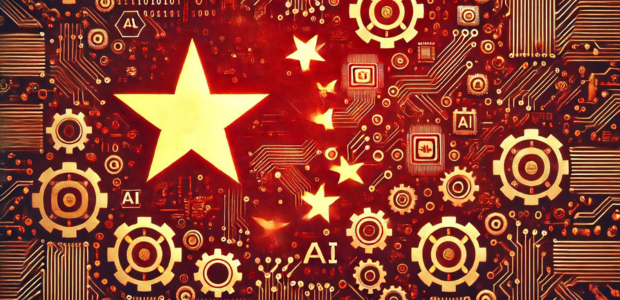
The global artificial intelligence landscape is often depicted as a high-stakes battleground dominated by corporate heavyweights in Silicon Valley. However, a quieter, more profound revolution is taking place thousands of miles away, reshaping the very foundations of who will win the AI race. This revolution is not occurring in a corporate lab, but in the classrooms and specialized training academies across China. The nation’s strategic ascent in artificial intelligence is increasingly attributed not just to computational power or data volume, but to a meticulously engineered and massively scaled education system designed to cultivate the world’s largest pool of AI talent . This deep dive explores the multifaceted strategy behind China’s AI education dominance, from elite “genius classes” to nationwide policy initiatives, and examines how this pipeline of talent is poised to redefine technological power for decades to come .
The Historical Foundation: From Scientific Revival to Strategic Necessity
To understand China’s current prowess in AI education, one must look back at the foundational beliefs instilled post-1949. The sentiment that “science is the key to national progress” became deeply embedded in the national psyche, a conviction that only intensified after the economic reforms of the late 20th century. By the 1980s, the slogan “nurture talents early, nurture talents quickly” became a rallying cry for local education departments, coinciding with the nationwide push for nine-year compulsory education that elevated the overall literacy and analytical skills of the population .
This era also saw the birth of a concept that would become central to China’s tech ambitions: the “genius class.” These specialized programs were initially established to cultivate young minds for the International Science Olympiads. When two Chinese students first participated in the International Mathematical Olympiad in 1985 and returned with a bronze medal, it ignited a national ambition. The following year, a full Chinese delegation secured three bronzes, a feat celebrated across the country. This success spurred elite high schools to invest scarce resources into creating dedicated Olympic classes, mirroring the country’s approach to training professional athletes, but for intellectual competition . Today, these classes are a staple in thousands of schools, and China routinely sweeps the medal counts at these global competitions. In 2025, for instance, 22 out of 23 Chinese participants clinched gold medals, a testament to the enduring power of this early talent-spotting mechanism .
The Genius Class System: The Engine of Elite AI Talent
The term “genius class” (often referred to as “talent classes” or “experimental classes”) is not merely a colloquialism; it is the cornerstone of China’s AI talent pipeline. This system functions as a highly selective, multi-tiered funnel designed to identify and rigorously train students with exceptional aptitude in science, technology, engineering, and mathematics (STEM) from a young age, typically between 16 and 18 years old .
A. Identification and Recruitment
Students are not just self-selected; they are actively identified based on outstanding performance in provincial and national academic competitions. These students are often pulled from the standard educational track and placed into intensive, specialized programs.
B. High-Intensity Curriculum
The curriculum in these classes is far more demanding than the standard high school path. It focuses on advanced problem-solving, theoretical concepts, and deep dives into mathematics, physics, chemistry, and, increasingly, computer science and informatics. While their peers are intensely preparing for the infamous Gaokao (college entrance examination), students on this “genius track” have a unique incentive: top performers in national and international Olympiads can secure admission to prestigious universities like Tsinghua or Peking University without taking the exam, allowing them to focus entirely on advanced studies .
C. The Connection to Higher Education
The most brilliant of these students then feed directly into the elite university programs that have become the envy of the world. Institutions like Tsinghua University’s renowned Computer Science Experimental Class (colloquially known as “Yao Class”) and Shanghai Jiao Tong University’s elite computer science programs serve as the pinnacle of this educational pyramid. The Yao Class, founded in 2005 by Turing Award winner Andrew Yao, was established with the explicit goal of creating a talent cultivation center on par with MIT and Stanford—a goal that many argue has been resoundingly achieved. The class accepts only about 30 students annually, each one an Olympic gold medalist or a top scorer in their provincial college exams .
D. The Fruit of the System
The impact of this system is visible across the global tech landscape. The founders and core R&D leaders of China’s tech titans—from ByteDance (owner of TikTok) and Alibaba to Meituan and Pinduoduo—are products of this system. More recently, the teams behind cutting-edge AI startups like DeepSeek are almost entirely composed of “genius class” graduates. The team that developed the groundbreaking DeepSeek-V2 model, which served as the foundation for the globally acclaimed R1 model, consisted of young researchers, many of whom were interns and recent graduates from these elite tracks .
The “101 Plan”: A Systemic Upgrade for the AI Century
While the “genius class” system focuses on the pinnacle of the talent pyramid, China has simultaneously engineered a broader, more inclusive strategy to raise the floor of its AI workforce. This is epitomized by the “101 Plan,” a national initiative launched by the Ministry of Education in 2021. Initially a pilot program for computer science, the plan has rapidly expanded to encompass mathematics, physics, chemistry, and, crucially, artificial intelligence in 2024 .
The “101 Plan” is a comprehensive effort to standardize and elevate the quality of foundational courses across top universities. Its core components include:
-
Unified Curriculum: Creating a high-quality, standardized set of core courses for AI and related disciplines, ensuring that students at participating universities receive a world-class foundational education.
-
Open Educational Resources: Building a massive, publicly accessible repository of Chinese-language textbooks, teaching materials, and online resources. This is designed to democratize access to top-tier educational content, allowing students from less prestigious regional universities to benefit from the same materials used at Tsinghua or Peking University .
-
Bridging the Gap: By fostering collaboration between elite research universities and regional teaching institutions, the plan actively works to narrow the educational divide between China’s coastal megacities and its vast interior, ensuring a more geographically distributed pool of talent .
The results are tangible. Seventy-seven of China’s most academically powerful universities are now part of this initiative. Tsinghua University, for example, has leveraged the plan to launch 117 pilot courses and 147 AI-enhanced teaching classes, developing tools like intelligent teaching assistants and automated grading systems. The plan is a clear acknowledgment by Beijing that competing in AI requires not just a few brilliant minds, but a deep and broad bench of highly skilled engineers and researchers .
National Policy and Investment: Fueling the Talent Engine
The rise of China’s AI education system cannot be separated from the guiding hand of the state. In 2017, the State Council’s “New Generation Artificial Intelligence Development Plan” elevated AI to a national core strategy, with talent cultivation as a central pillar. This was followed in 2018 by the “University AI Innovation Action Plan,” which spurred the rapid expansion of AI as a formal academic discipline. The response was explosive: nearly 600 Chinese universities now offer undergraduate programs in artificial intelligence, a figure that dwarfs the offerings in any other country .
This policy-driven expansion extends all the way down to the primary and secondary level. The government has launched nationwide pilot programs for AI education in primary and secondary schools, introducing children to basic concepts of coding, algorithms, and data literacy from an early age. Cities like Beijing and Hangzhou have been at the forefront, integrating AI into general education curricula . The goal is to foster a generation that is not just digitally literate, but computationally fluent, ensuring a steady stream of students prepared for advanced STEM study.
Recent policies, such as the 2026 “AI + Manufacturing” Special Action Plan issued by eight government departments, further solidify this commitment. The plan explicitly calls for:
-
A. Forecasting Talent Needs: Conducting market research to predict future AI talent demands and proactively adjusting university curricula to meet them .
-
B. Creating New Institutions: Supporting the growth of new-model academies like the Beijing Zhongguancun Academy and the Shanghai Chuangzhi Academy, designed to foster interdisciplinary talent .
-
C. Developing Leaders: Creating new models to cultivate leading scientists and innovation teams, while also actively attracting top overseas talent .
Measurable Outcomes: A Shift in the Global Balance of Power
The success of this multi-layered strategy is no longer theoretical; it is measurable and visible in global rankings and the corridors of top AI companies. The 2026 CSRankings, a metric that tracks faculty publication output at top conferences, provides a stark illustration of this shift. Chinese universities now dominate the rankings. They claim seven spots in the global top 10 for computer science overall. In the field of Artificial Intelligence, the dominance is even more pronounced: Chinese universities occupy all of the top 8 spots and account for 65% of the global top 20 .
Peking University, for example, topped the world in both the broad AI category and Computer Vision. Its faculty published 165 papers in machine learning alone in the 2025-2026 cycle, a volume of high-impact research that signals a deep and vibrant academic community . This pipeline of research is directly feeding the commercial sector.
This reality has not gone unnoticed by Western tech leaders. Nvidia CEO Jensen Huang observed last year that a walk through the offices of leading AI labs like Anthropic, OpenAI, or Google DeepMind reveals a stunning number of AI researchers of Chinese origin. He affirmed that these researchers are “world-class” and capable of “extraordinary work” . What Huang is observing is the outflow of a system that has spent decades perfecting the art of identifying, nurturing, and training mathematical and analytical talent. Today, that talent is not just leaving China; it is increasingly choosing to stay, fueling a booming domestic tech scene. As one young Chinese researcher pursuing a PhD in the US noted, while he wanted to experience different cultures, the uncertain US visa policy and the excellent opportunities back home are making a return to China an increasingly attractive option .
Beyond the Elite: Popularizing AI for a New Era
While much of the focus is on the “genius classes” and top universities, China is also making significant strides in popularizing AI education across its vast K-12 system. The goal, as described by education officials, is to move AI education from isolated “bonsai” examples—beautiful but rare—to a ubiquitous “landscape” that benefits every student .
To achieve this, the Ministry of Education has released key guiding documents, including the “Notice on Strengthening AI Education in Primary and Secondary Schools” and the “AI General Education Guide for Primary and Secondary Schools (2025 Edition).” The establishment of 509 national AI education base schools serves as a testing ground for new curricula and teaching methods .
However, the path to universal AI education is not without its challenges. Key obstacles include:
-
Resource Disparity: Schools in first-tier cities have access to advanced AI labs and experienced instructors, while those in rural and underdeveloped regions often lack basic digital infrastructure .
-
Teacher Training: There is a severe shortage of teachers qualified to teach AI. A “specialist” teacher capable of guiding students through complex projects is a rarity, and professional development opportunities are unevenly distributed .
-
Curriculum Standardization: While many schools have developed innovative courses, these successful models are often not standardized or shared, making it difficult to replicate them elsewhere .
To address these issues, the National Primary and Secondary School AI Education Alliance was recently established. With seven regional collaboration centers, this alliance aims to create a coordinated ecosystem. It plans to leverage the theoretical knowledge of universities, the technical expertise of companies, and the practical experience of base schools to create a “university + enterprise + base school” training network. This network will provide systematic training for teachers nationwide, with a focus on helping educators in less developed regions, ensuring that every school can eventually offer quality AI education .
The “Genius Class” Experience: A Personal and National Reflection
The system, for all its quantitative success, is also a deeply human one. A personal account from a former “genius class” student, now a journalist, reveals the nuances of this intense educational experience. Admitted to a top high school in Hangzhou for her mathematical ability, she struggled with the pressure of the elite program. The relentless focus on competition and her own preference for the humanities made her feel like an outlier. It was only when she learned that a prize in the Chemistry Olympiad could grant her direct university admission—sparing her from the Gaokao—that she channeled all her energy into the subject .
She succeeded, securing her place at a top university, though she ultimately chose a non-science major. Reflecting on her class of 50, she notes that about a third now hold executive positions in top tech companies in both China and the US, while others have thrived in finance, medicine, and academia. While she admits she can no longer recite the periodic table, she credits the “genius class” with instilling in her a spirit of inquiry, the ability to reason through complex problems, and the courage to face the unknown—qualities she considers invaluable for life . This personal story highlights the dual nature of the system: it is a pressure cooker designed to produce elite technologists, but it also inadvertently cultivates a resilient, problem-solving mindset that benefits all who pass through it, regardless of their ultimate career path.
Conclusion: The Unfolding Future of Global AI
China’s dominance in AI education is not the result of a single policy or a recent surge of interest. It is the culmination of a decades-long, systematic national effort to build a comprehensive talent pipeline. From the early identification of prodigies in “genius classes” and their nurturing in world-class university programs like the Yao Class, to the nationwide standardization efforts of the “101 Plan” and the push for K-12 AI literacy, every level of the education system is being optimized for the AI age .
The result is a virtuous cycle: government investment drives educational innovation, which produces a massive pool of highly skilled graduates. These graduates fuel groundbreaking research and world-beating companies like DeepSeek, which in turn create exciting opportunities that attract even more young people to pursue STEM fields . As Dai Wenyuan, founder of the AI company Fourth Paradigm and himself a “genius class” graduate, observed, he has witnessed China’s transformation from an “AI talent vacuum” just 20 years ago to a nation capable of cultivating AI talent at scale. He noted that some of the most cutting-edge research work today is being done by fresh graduates, and he believes that “the true geniuses who will change the world are likely hidden among them” . As the world watches the AI race unfold, it is becoming increasingly clear that China’s most powerful asset is not its data or its computing power, but its people, systematically prepared to lead the next technological revolution.